5 Types of Creative Journals You Should Try
Explore different types of creative journals and find the style that’s right for you.
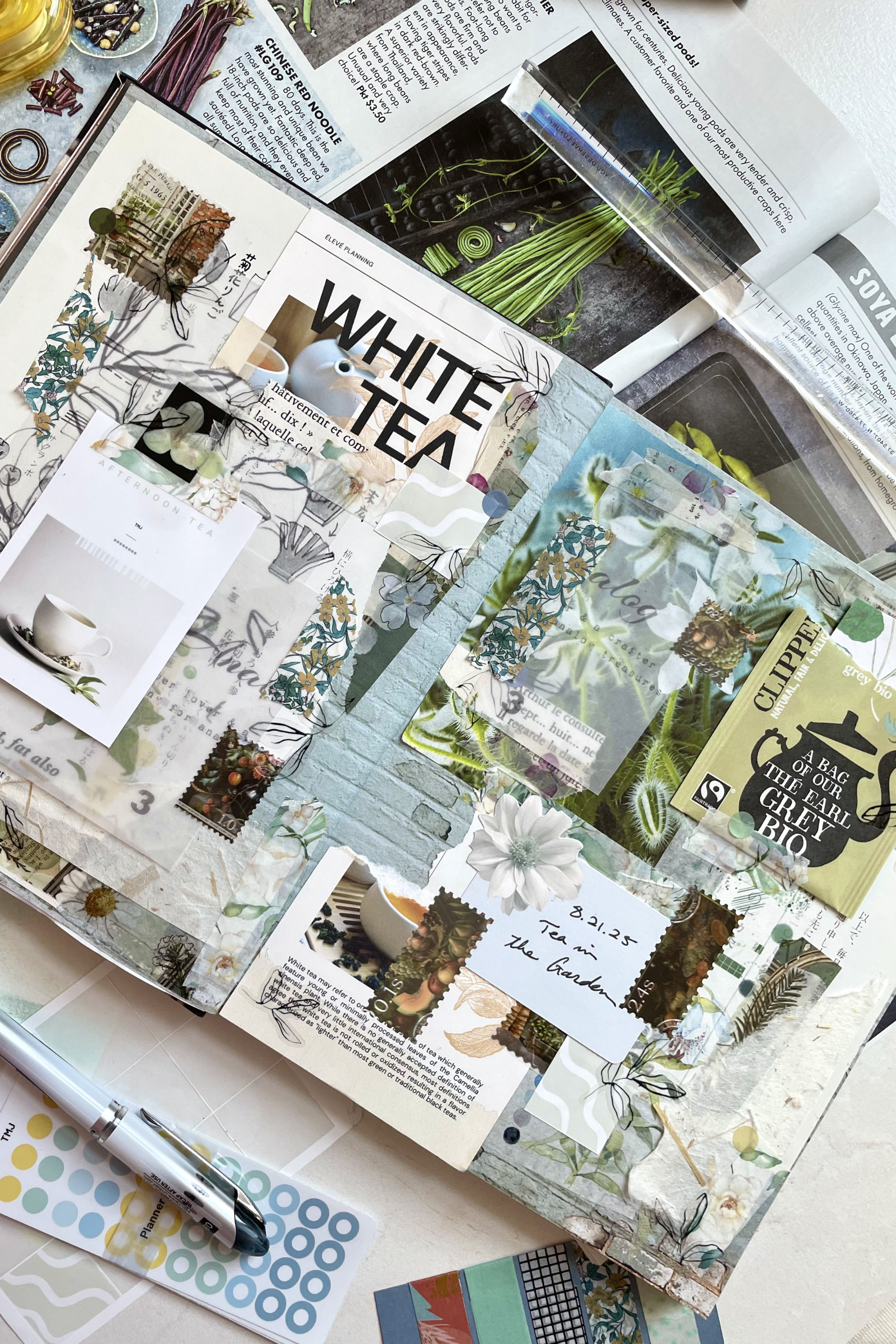
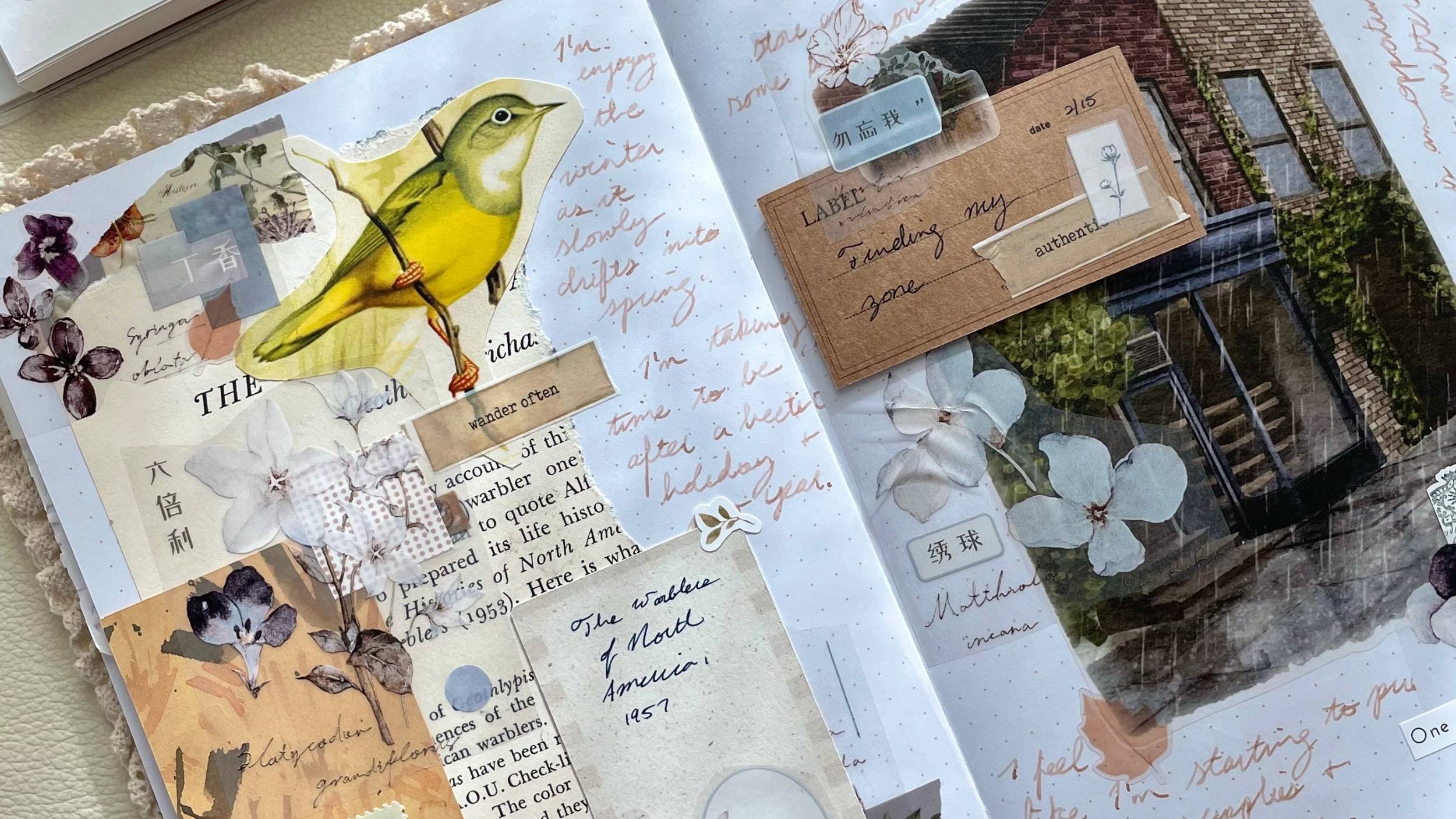
There are as many types of journals as there are journalers, from written diaries to productivity planners to artists’ sketchbooks. For many years my journaling practice has focused on creative journaling, which incorporates visual materials alongside or instead of written content.
My first creative journal was a fabric-covered, ribbon-bound scrapbook that my mother made for me when I was around six years old. I filled its blank pages with scraps cut from old calendars and magazines as well as photographs of my cat. That childhood experience started a lifetime love affair with paper, creativity, and journaling.
In high school and college I loved to journal in Smash Books - a popular line of creative journals produced by the scrapbook supplier K & Company from 2011 to 2022. I would collect museum brochures, movie tickets, maps, and photos to fill the colorful pages of my journals, assembling a playfully chaotic record of my first forays into adulthood.
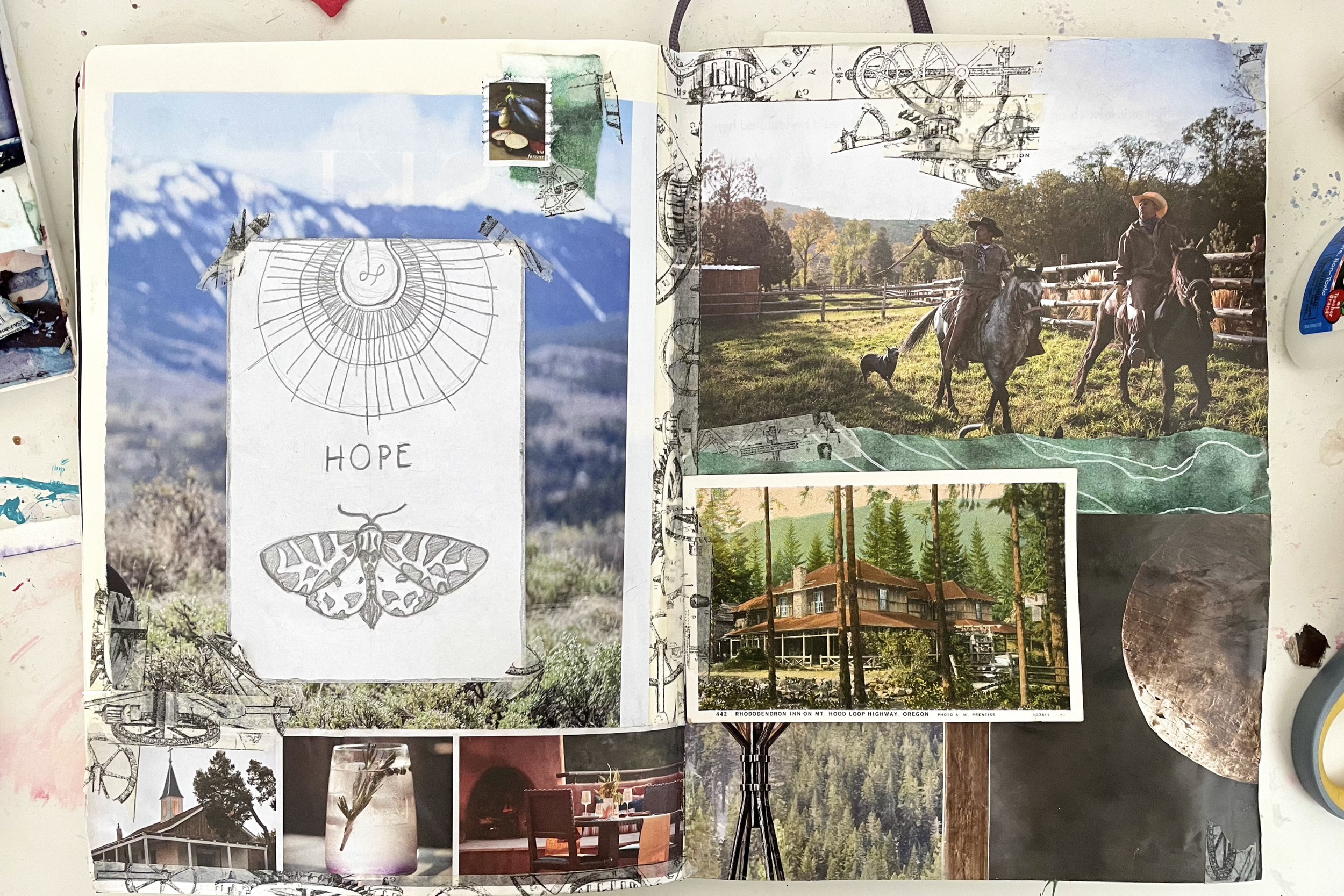
In grad school I experimented in mixed media visual journals to keep myself grounded while the politics of academia swirled around me. I layered watercolor, acrylics, block printing, photo transfers, and collage in messy volumes that served as private venues for creative experimentation and outlets for artistic inspiration.
In the present, I keep many different types and styles of creative journals. My favorite journal materials currently include floral washi tapes, vintage ephemera, pretty stickers, magazine clippings, and decorative papers. I’m sure my journaling practice will continue to grow and change throughout my life, shifting to meet the new needs of each succeeding version of myself while maintaining a creative through-line of inspiration and exploration.
I believe that creative journaling is a uniquely flexible and accessible creative process that’s open to anyone. To give you a little inspiration, today I’m discussing five different types of creative journals that you can take for a spin, whether you’re new to journaling or a seasoned crafter. These categories aren’t set in stone, and there’s often significant crossover between categories, but these five types will give you a solid starting point for further exploration.
Junk Journals
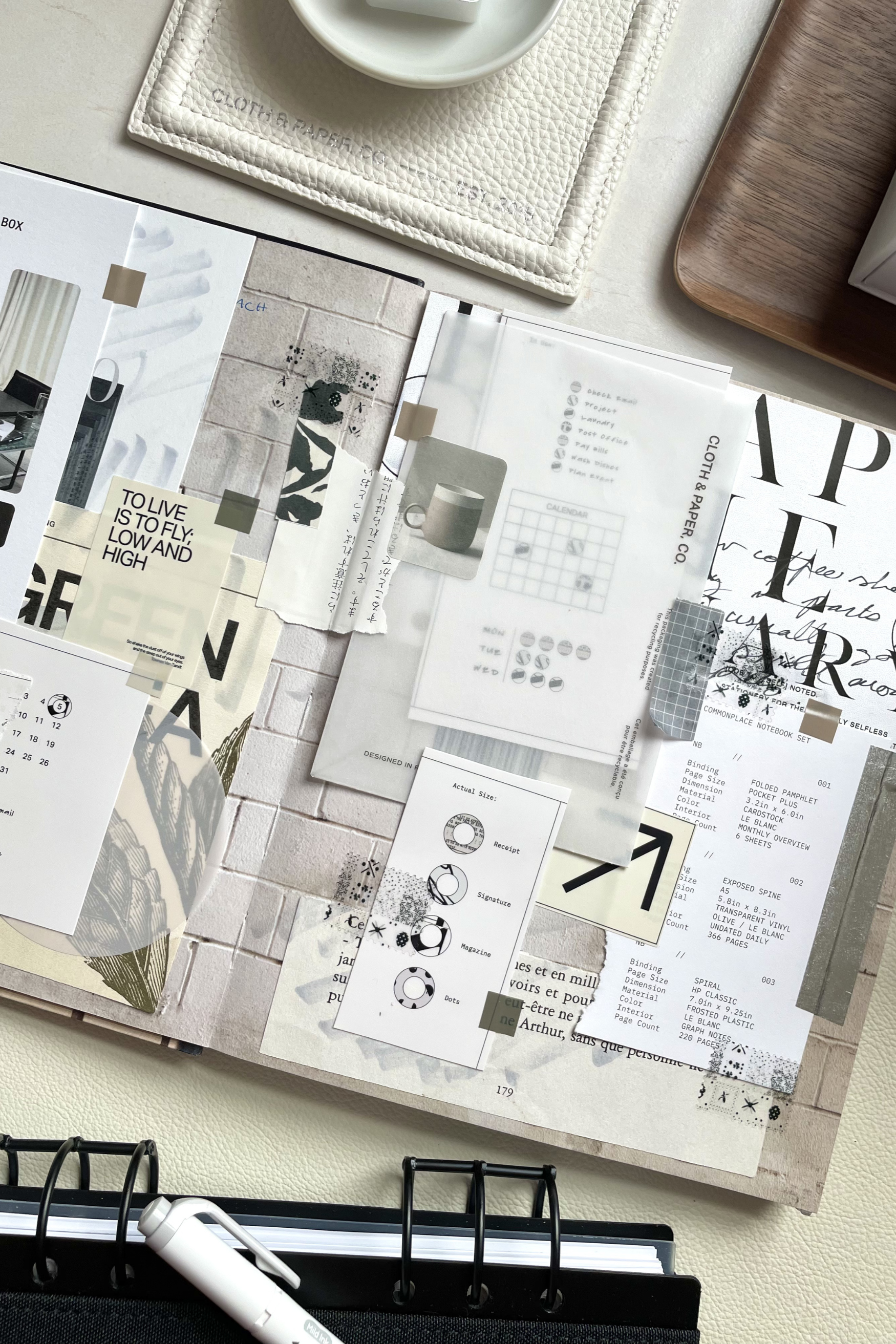
Junk journals are made from and/or incorporate primarily cast-off or “junk” materials. Anything can be used in a junk journal, but common materials include items like receipts, catalog and magazine clippings, ticket stubs, junk mail, and vintage ephemera.
I’ve seen some people split hairs about whether a journal counts as a junk journal if it uses decorative papers intended for crafting, or if it has to use exclusively (or at least mostly) found/waste/repurposed materials. Personally, I think these categories are most useful for helping you find sources of inspiration and other creators to connect with. There’s no journal police - you can call your journal whatever you want.
Bullet Journals
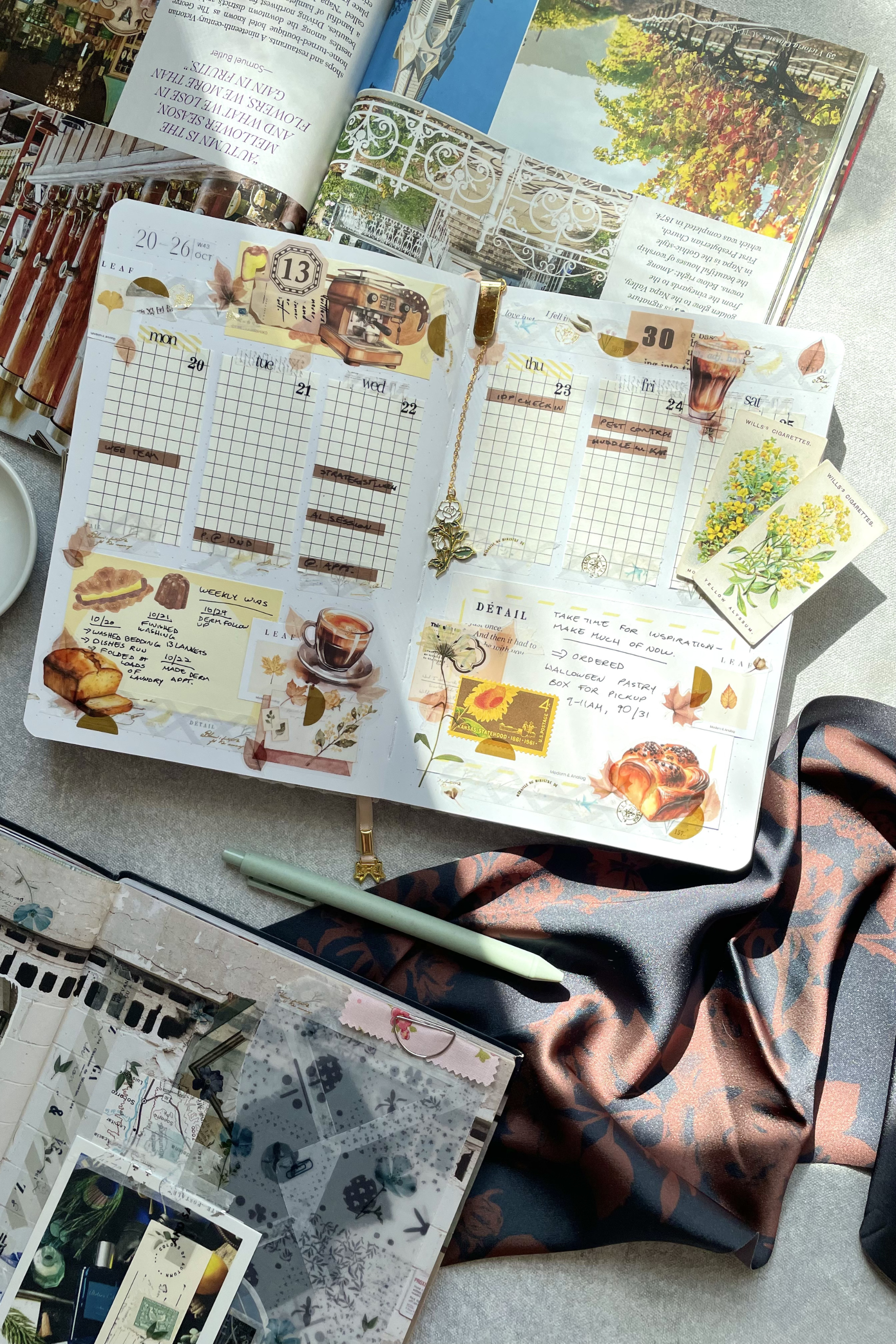
The bullet journal (often shortened to BuJo) is a concept coined by digital product designer Ryder Caroll in 2013. It typically refers to a dot-grid ruled journal that can be used to organize all aspects of life - from to-do lists to project brainstorming to notetaking - using a combination of symbols, indexing, and graphic notation.
Since Caroll founded the BuJo community, bullet journaling has expanded to include a wide variety of journalers and journal styles. Some BuJo enthusiasts prefer a minimalistic approach that focuses on productivity and efficiency, while others create beautiful and functional spreads that incorporate everything from habit tracking to reading lists to daily schedules.
Scrap Journals & Scrapbooks
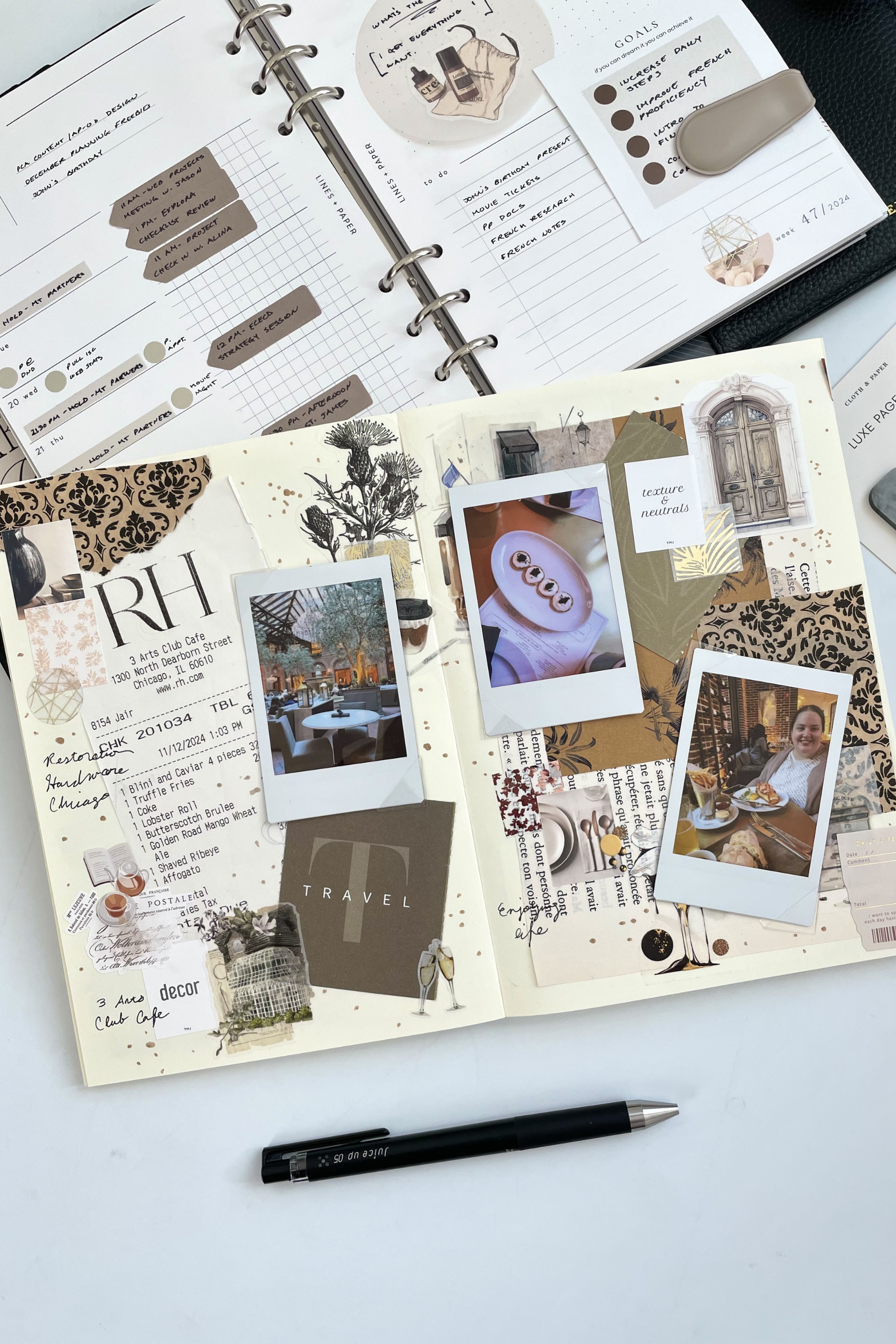
Scrap journals and scrapbooks are similar to (and in many cases, overlap with) junk journals. They typically use collaged paper elements and/or photos, and can range from highly finished, formal scrapbooks (like your mom or grandma might have made in the 80’s) to very informal collections of decorative papers and ephemera. The more informal types of scrap journals can have significant crossover with junk journals, especially if they use a lot of found or discarded materials.
Scrap journals are especially great for memory keeping, whether you like to carefully craft spreads with professionally printed photos and themed scrapbooking supplies, or you prefer the immediacy of found materials tipped into messy pages alongside Polaroid photos and handwritten notes.
Visual Journals
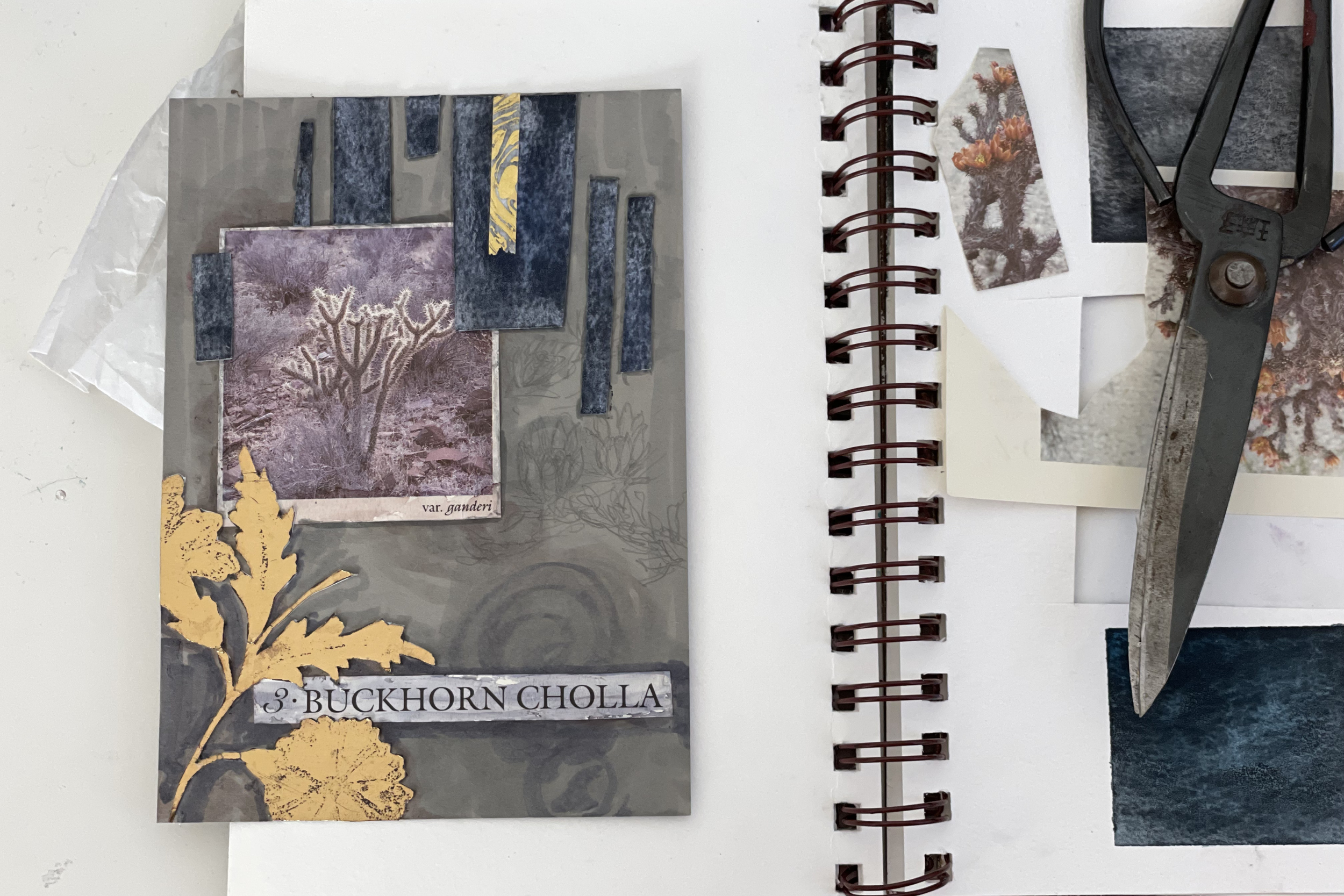
Visual journals tend to incorporate mixed media processes, from painting to photo transfers to printmaking. These types of journals can be spaces for personal explorations of thoughts and feelings, in-depth records of creative research and experimentation, chronicles of memories and experiences, or all of the above!
For artistic types who like to get their hands dirty but don’t want to be limited to a single process or medium, visual journals offer an open-ended opportunity to stretch your creative wings. Just remember to select a journal or notebook with heavyweight paper designed to stand up to wet media if you plan to use paints or inks!
Art Journals & Sketchbooks
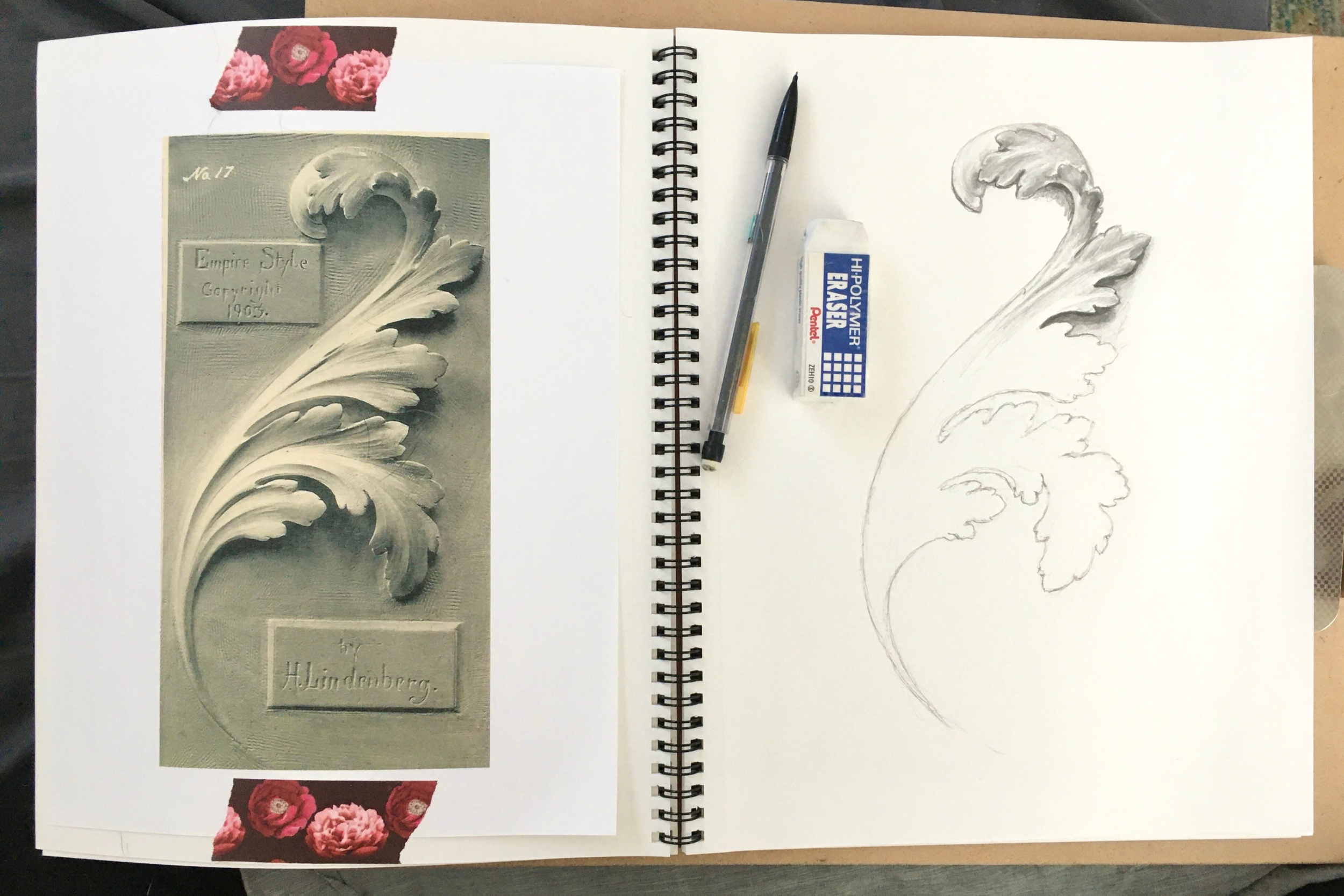
Art journals and sketchbooks are similar to visual journals but often focus on a specific medium like watercolor, drawing, or illustration. These journals serve as portable studios for creative practice.
I like to keep dedicated sketchbooks for practicing my drawing and watercolor skills, then cut out individual hand-drawn elements to collage in my other creative journals. I also like to use sketchbooks to explore particular subjects in detail, like botanical illustrations or architectural drawings.
No matter your interests or skill level, if you enjoy paper crafts, creativity, and personal expression, you’re sure to find a creative journaling style that suits your preferences. There’s a world of journaling inspiration out there on social media, so it’s easy to do a quick search on Instagram, Pinterest, or TikTok for the type of journal you're interested in to get ideas and tips. Let me know in the comments who your favorite journal creators are and where to find them! And happy journaling!
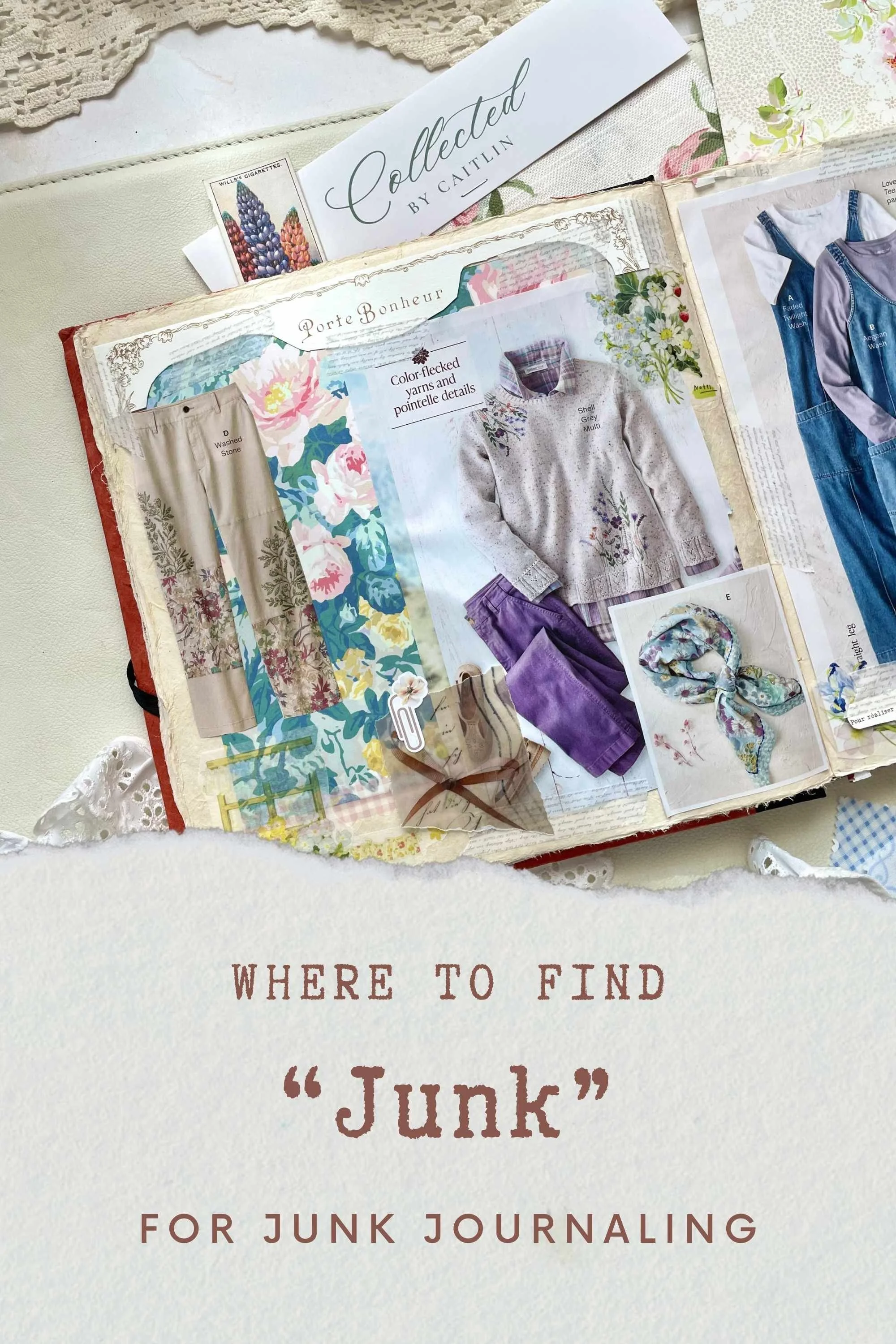
Where To Find “Junk” for Junk Journaling
My favorite junk journaling sources for interesting materials and unique ephemera.
Junk journaling is a type of journaling that uses found materials and ephemera as content (and sometimes even as the material of the journal itself). Junk journaling celebrates the ordinary and imperfect moments of day to day life. Anything can go in a junk journal - ticket stubs, discarded product packaging, maps, receipts, brochures, catalog clippings, vintage greeting cards - the options are endless.
Because of this versatility, junk journaling can be a very inexpensive and accessible introduction to creative journaling. It offers a way to memorialize daily life and celebrates the materials we come across in our ordinary routines. You can find items for junk journaling almost anywhere, but after years of keeping junk journals, I have some favorite sources for interesting and unique materials. Read on to explore my faves.
One of the easiest ways to get started with junk journaling is to begin saving used packaging from regular purchases like food or snacks, clothing, or skincare products. Companies put a lot of money into making product packaging as enticing as possible and the resulting junk can be recycled into colorful and creative journal spreads.
But packaging isn’t the only source of interesting material in daily life. You can save and use movie tickets, shopping receipts, takeout menus, to-go cup sleeves, and more to chronicle life in your junk journal. In fact, once you start a junk journal, you may find yourself noticing new possibilities as you go about your normal activities. Business cards on the counter of a local restaurant. Seed packets at the garden supply store. Old newspapers left on the table at your favorite coffee shop. As with many creative habits, junk journaling offers opportunities for paying attention to what often goes unnoticed.
When you begin junk journaling, you may find yourself looking at ordinary (and maybe even unwanted) items like junk mail in a different light. You could create a series of collages using advertising postcards that would otherwise be discarded, or you might discover new uses for holiday catalogs that find their way to your mailbox. Personally, I love receiving physical catalogs in the mail for clothing, home goods, and gardening because they offer such a variety of interesting imagery and typography to use in my journal pages.
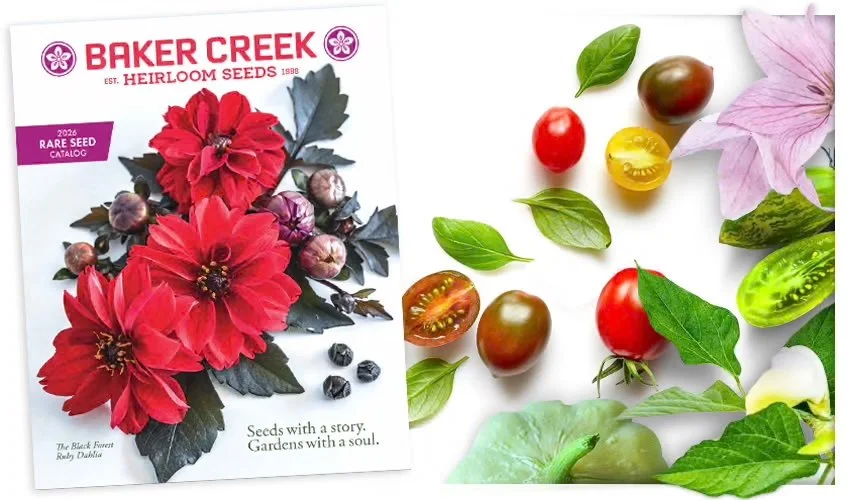
While mail order catalogs are much less popular now than in decades past, you can still order free catalogs from many companies. Some of my favorite places to get print catalogs from include Baker Creek Heirloom Seeds, April Cornell, The Vermont Country Store, Holly Yashi, David Austin, and Serena & Lily.
And you don’t have to wait for junk to come to you! Junk journaling provides the perfect excuse to explore your city or neighborhood. Stop at the reception desk of any art or natural history museum to stock up on gallery maps, visitor guides, and exhibition flyers. Pick up pretty postcards at your local botanical garden or zoo. Collect stickers from the gift shops of national parks or regional tourist attractions. Visit cultural and community festivals and be on the lookout for free or inexpensive paper goods.
One of my favorite experiences finding unexpected journaling materials took place at my local Aki Matsuri (Japanese Fall Festival). The festival featured a thrift/vintage vendor tent, where I was delighted to find tables full of vintage Japanese books and magazines selling for pennies. I purchased a stack of vintage knitting magazines and illustrated cookbooks for a total of about five dollars. These moments of delight and serendipity are what make junk journaling so fun!
Libraries, community centers, and local universities are all great places to scout for journal materials. When I was growing up my home town library had a free table in their lobby where I regularly scored old National Geographic and home decor magazines. I worked on a state university campus after grad school and used to love walking through the biology department building to pick up old, defunct textbooks that professors had left behind. Community centers often have substantial selections of brochures for local businesses and attractions as well as regional maps and tourism guides.
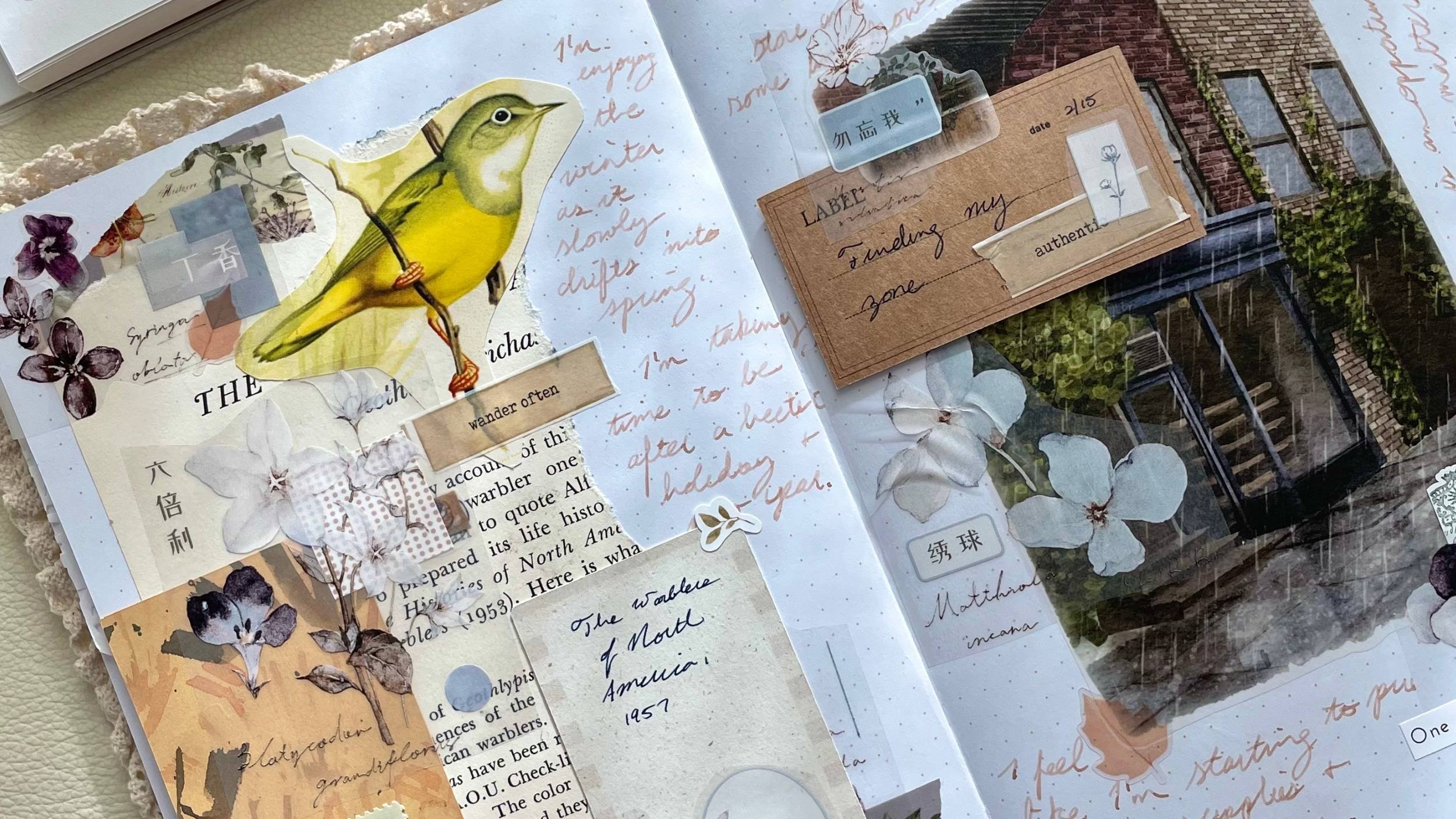
If you enjoy hunting for items at garage sales, thrift stores, or junk shops, you’ll have access to an almost infinite variety of unique ephemera, from old sheet music to antique photographs to vintage books. I’ve found everything from hundred-year-old German grammar books* to scientific monographs on South American orchids and Victorian millinery advertisements on my local flea market circuit - all at bargain prices. If, like me, you have a soft spot for antique art and imagery, these venues are a goldmine of creative inspiration.
*A Note: As a rule, I don’t cut up or disassemble antique books with historic or collectible value, but there are countless other cast-off books sitting neglected on thrift store shelves that can be given a new life in creative projects. If you’re sensitive to the thought of directly repurposing old books, you can also digitally scan pages and print them out to use again and again in your journal spreads.
No matter your interests, budget, or skill level, junk journaling is a creative practice that can be adapted to fit your personal life and style. At its core, junk journaling celebrates the unexpected creative opportunities of daily life. There’s no wrong way to keep a junk journal - you can make your own rules as you go along. I hope the sources I’ve listed give you some new ideas for future projects, and I’d love to hear in the comments - what are your favorite sources for junk journal materials?
My Must-Have Tools for Creative Journaling
Discover my favorite tools and supplies for creative journaling projects.
One of the things I love about the process of creative journaling is that there are no rules. Whether you prefer to paint mixed-media creations or collage scraps of vintage ephemera, you can use any methods and materials that inspire you as part of your practice. With this variety of techniques at your disposal, it would be impossible to create a comprehensive tool list that covers every medium. However, there are a few essential types of tools that will be useful in almost any journaling process.
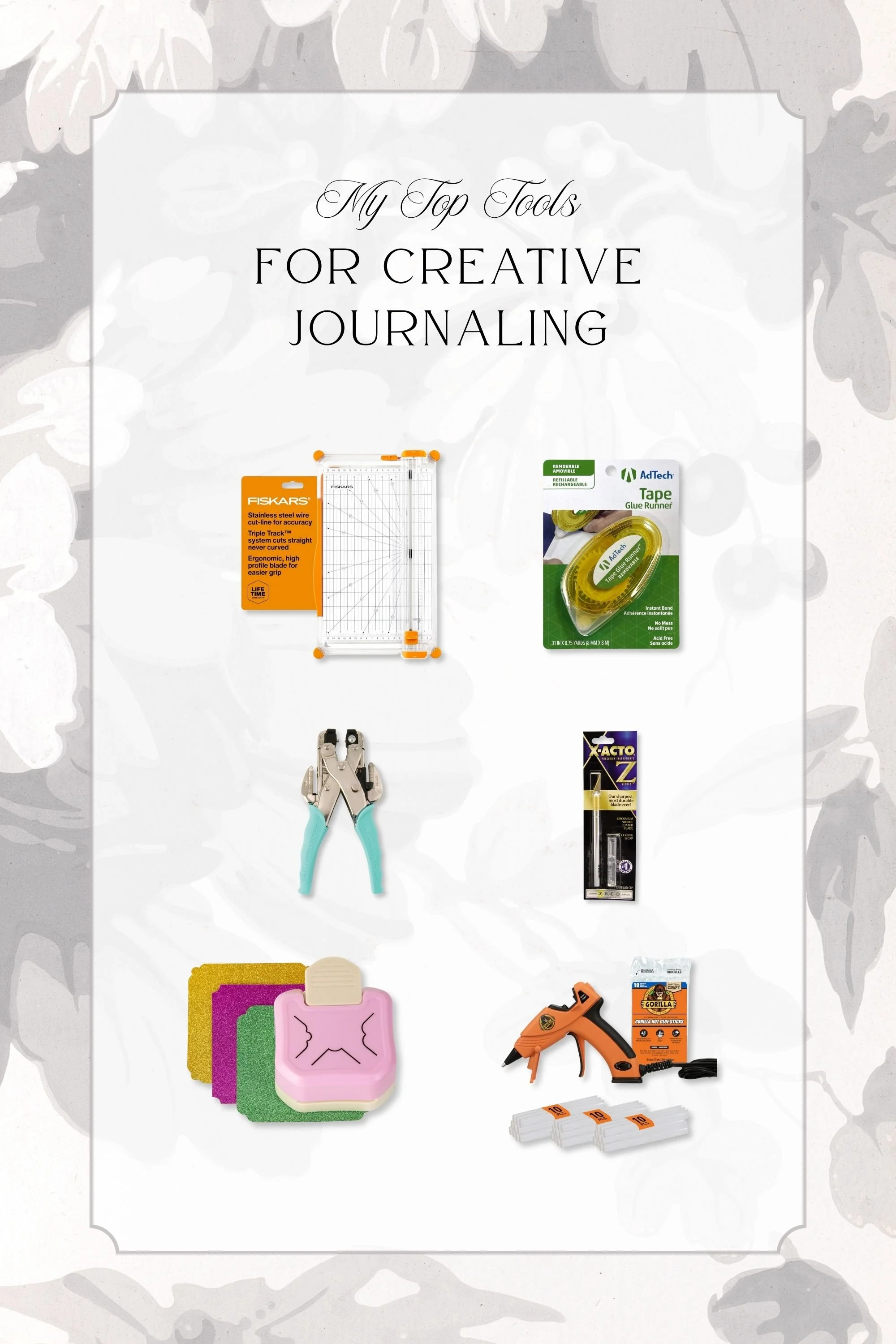
In my experience, journaling tools break down into three main categories (with some overlap between these general types) - tools for cutting, tools for shaping, and tools for attaching.
Cutting Tools
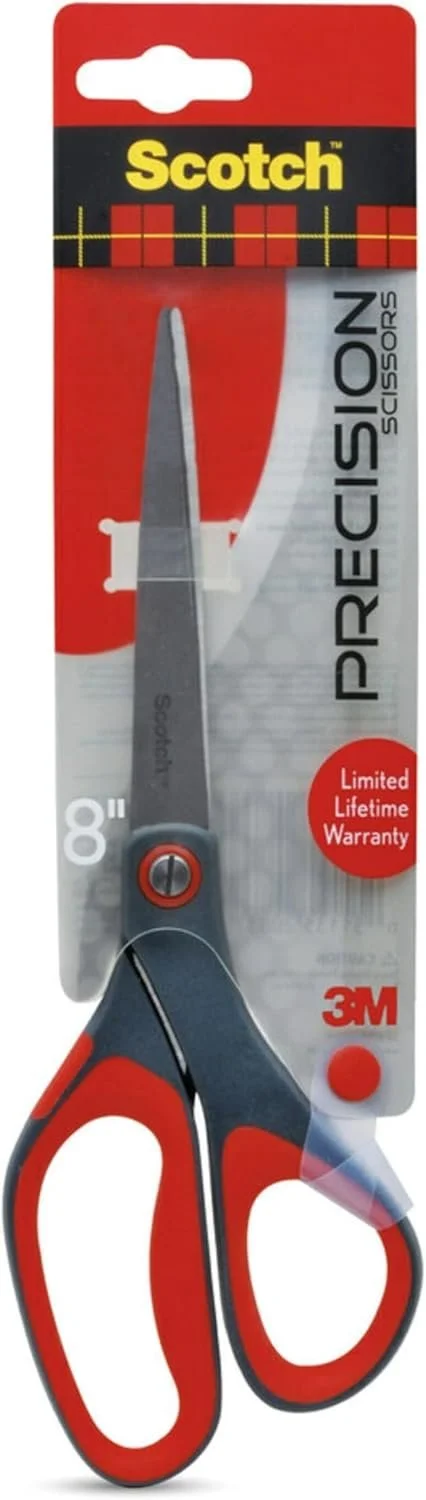
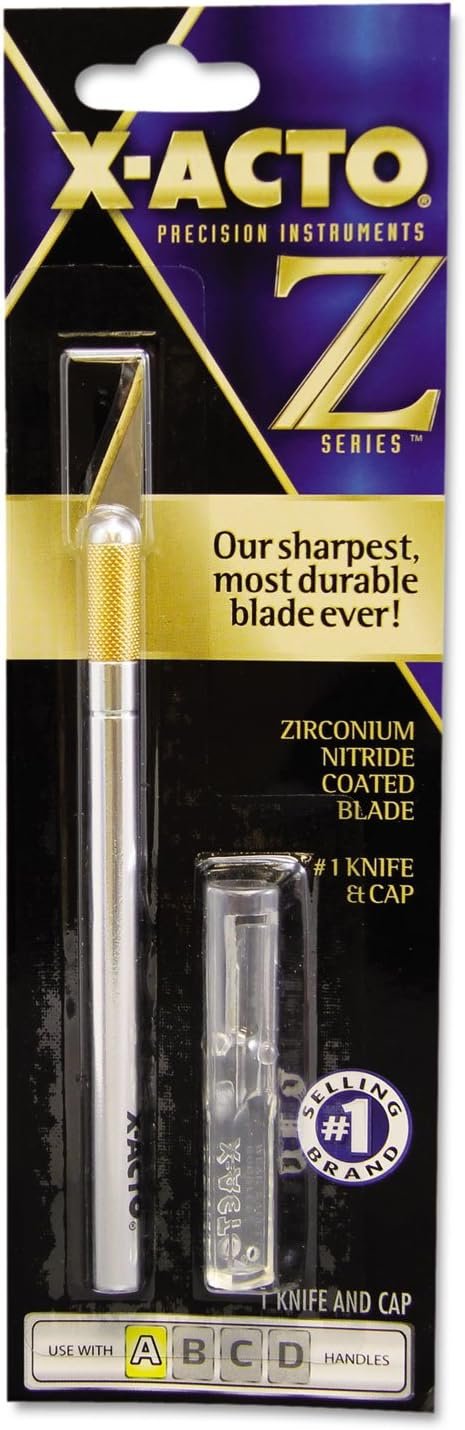
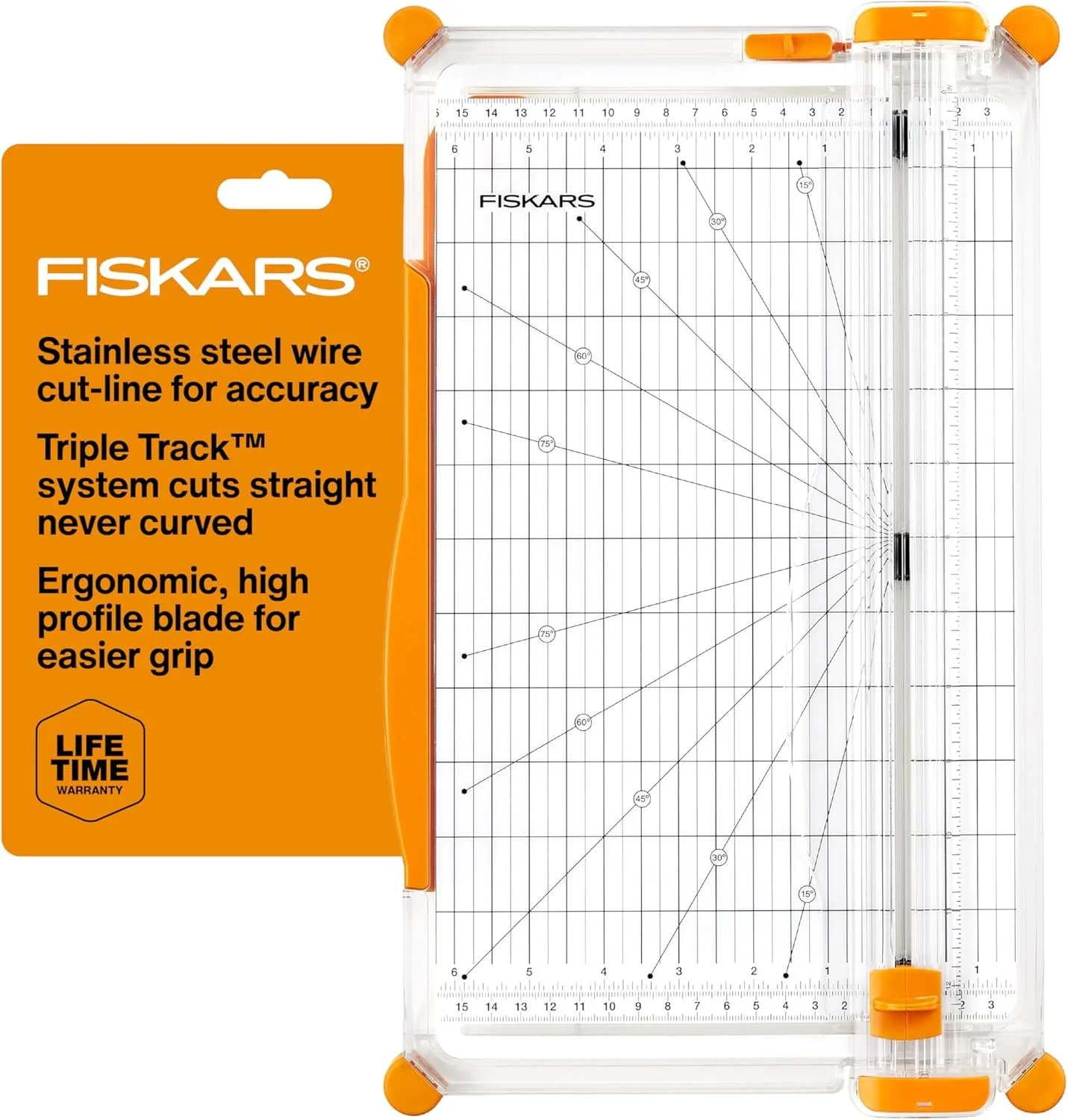
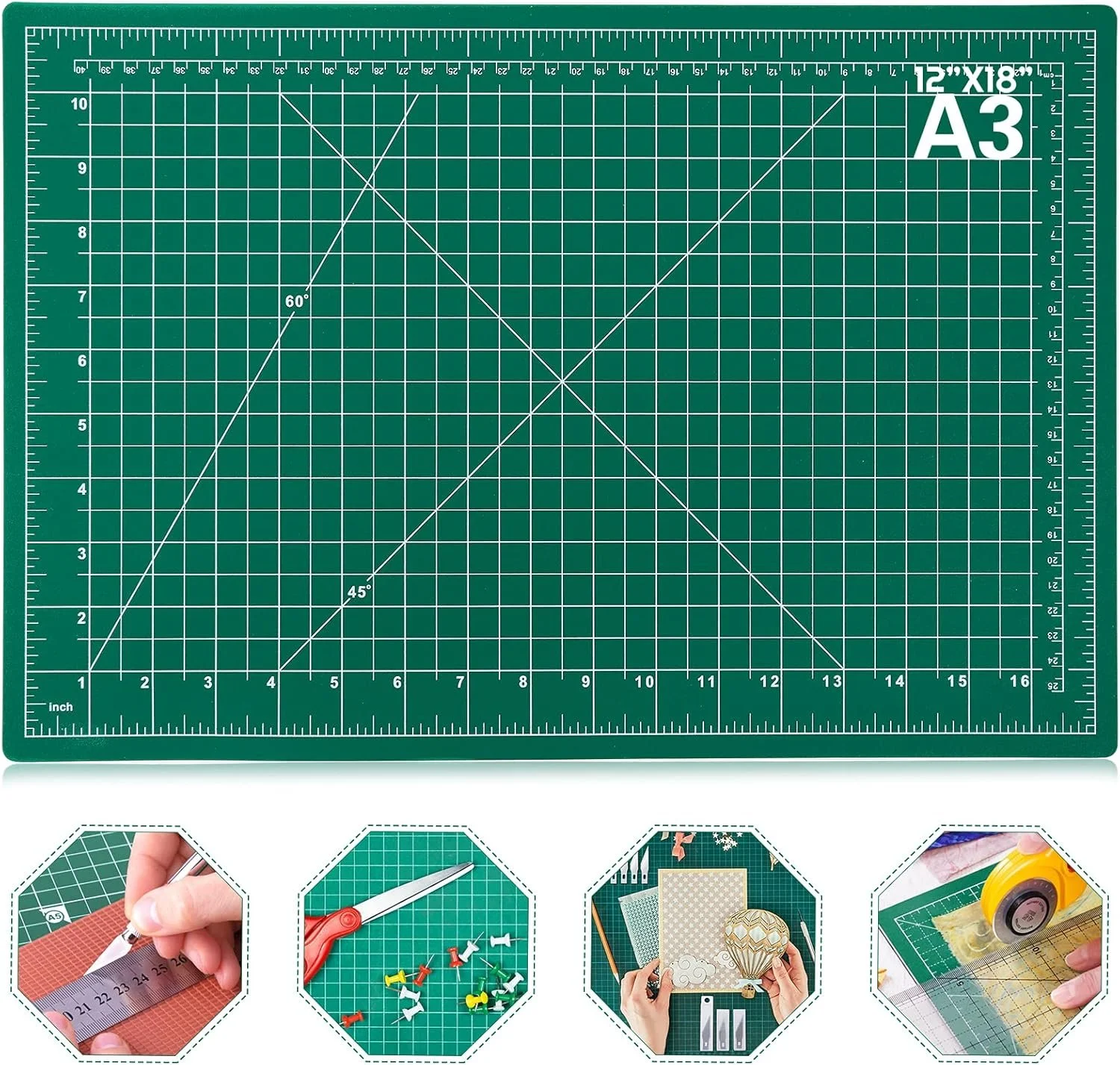
Cutting tools are designed to break paper or other materials down into smaller pieces. Having the basics - like a good pair of scissors for general cutting tasks, and a craft knife for more detailed work - will cover most of your bases. In general, if you’re working with both paper and fabric in your journaling process, you should have different scissors for each material, as paper dulls scissors more quickly than fabric, and fabric tends to benefit from sharper cutting blades.
There are additional tools you can add to your kit, like paper cutters - which cut clean and consistent straight lines - and cutting mats - which protect your work surface from sharp blades. I particularly like to use my paper cutter for trimming printables and cutting consistently sized pages or cards for larger projects. While these tools aren’t essential, they can make your life easier.
Shaping Tools
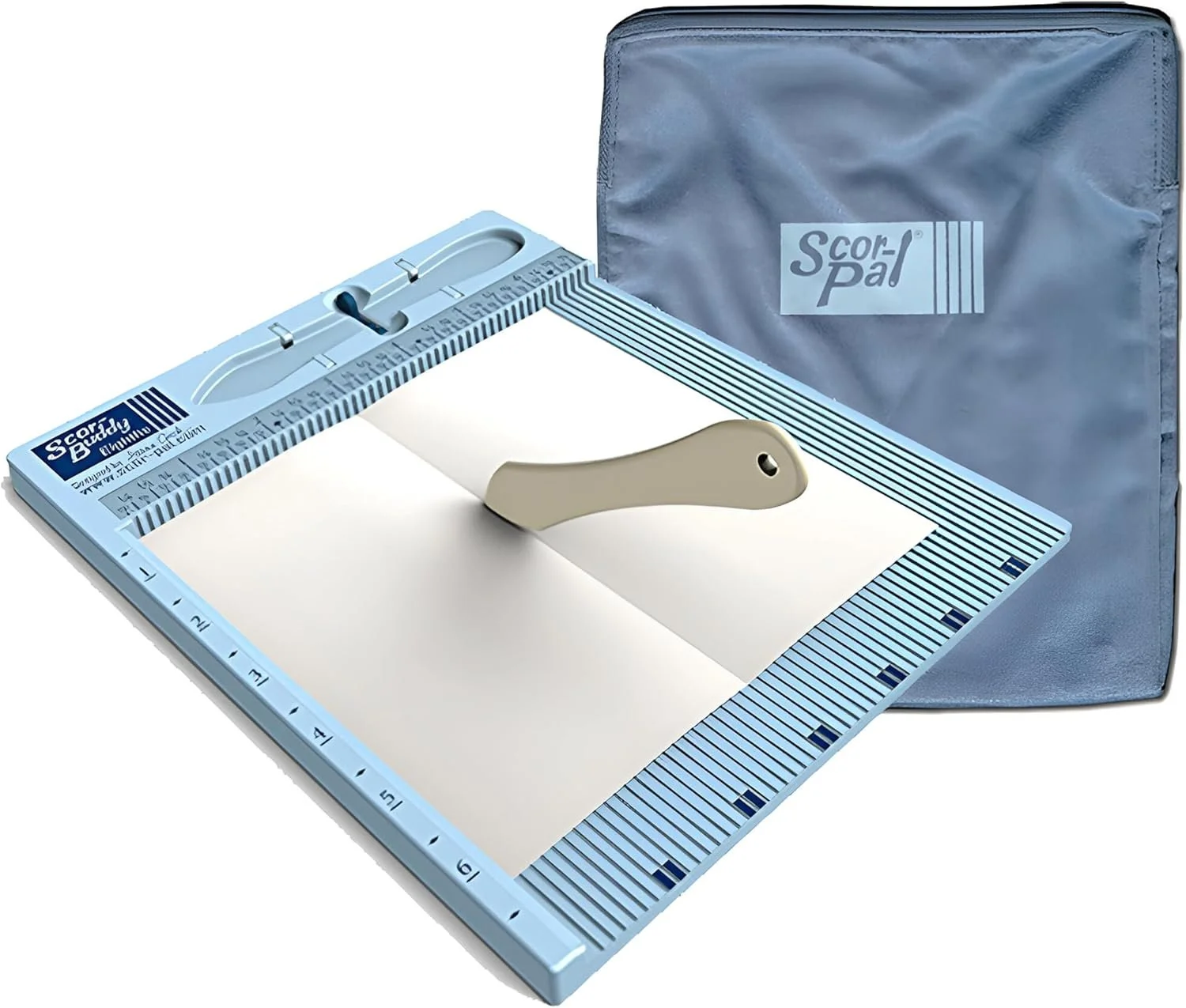
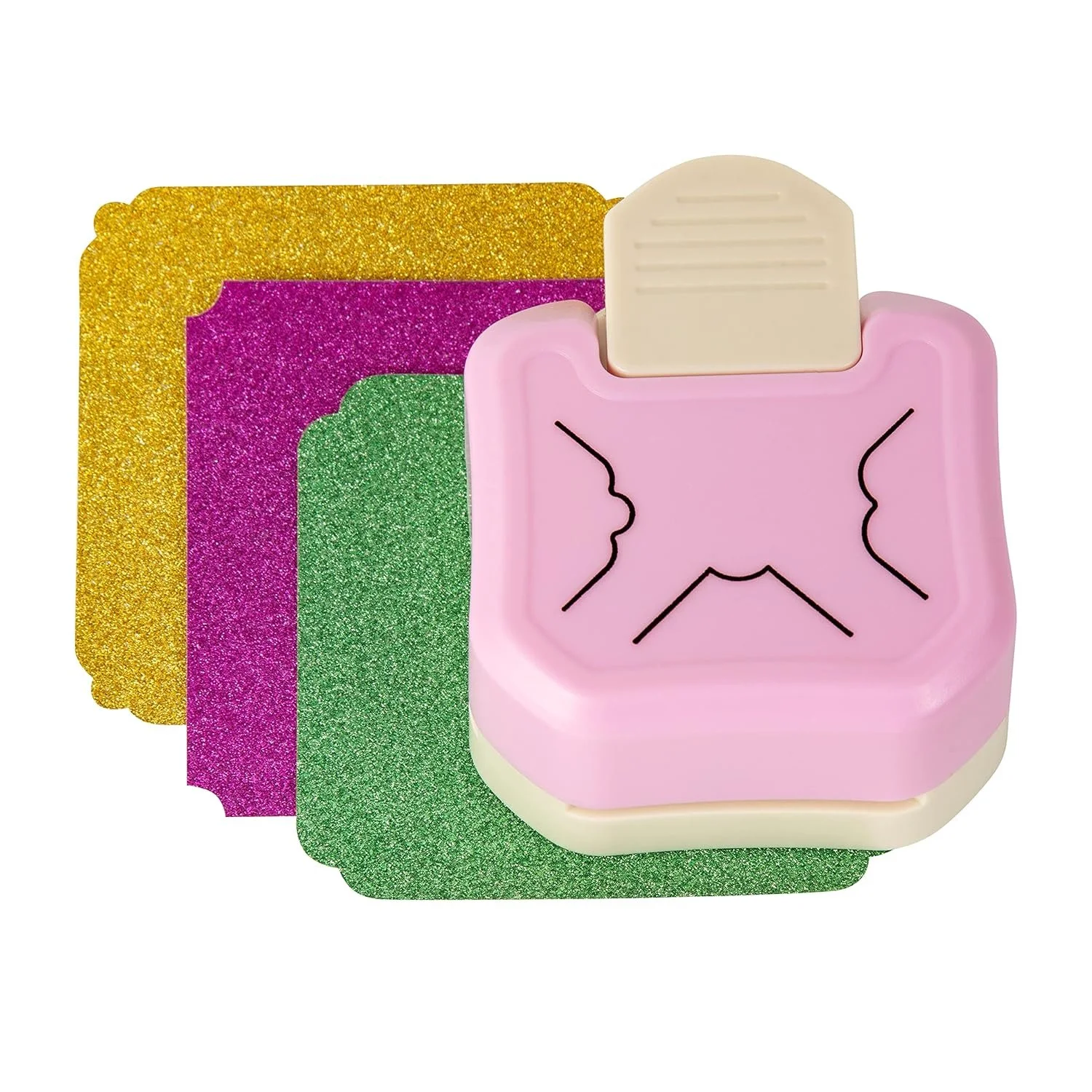
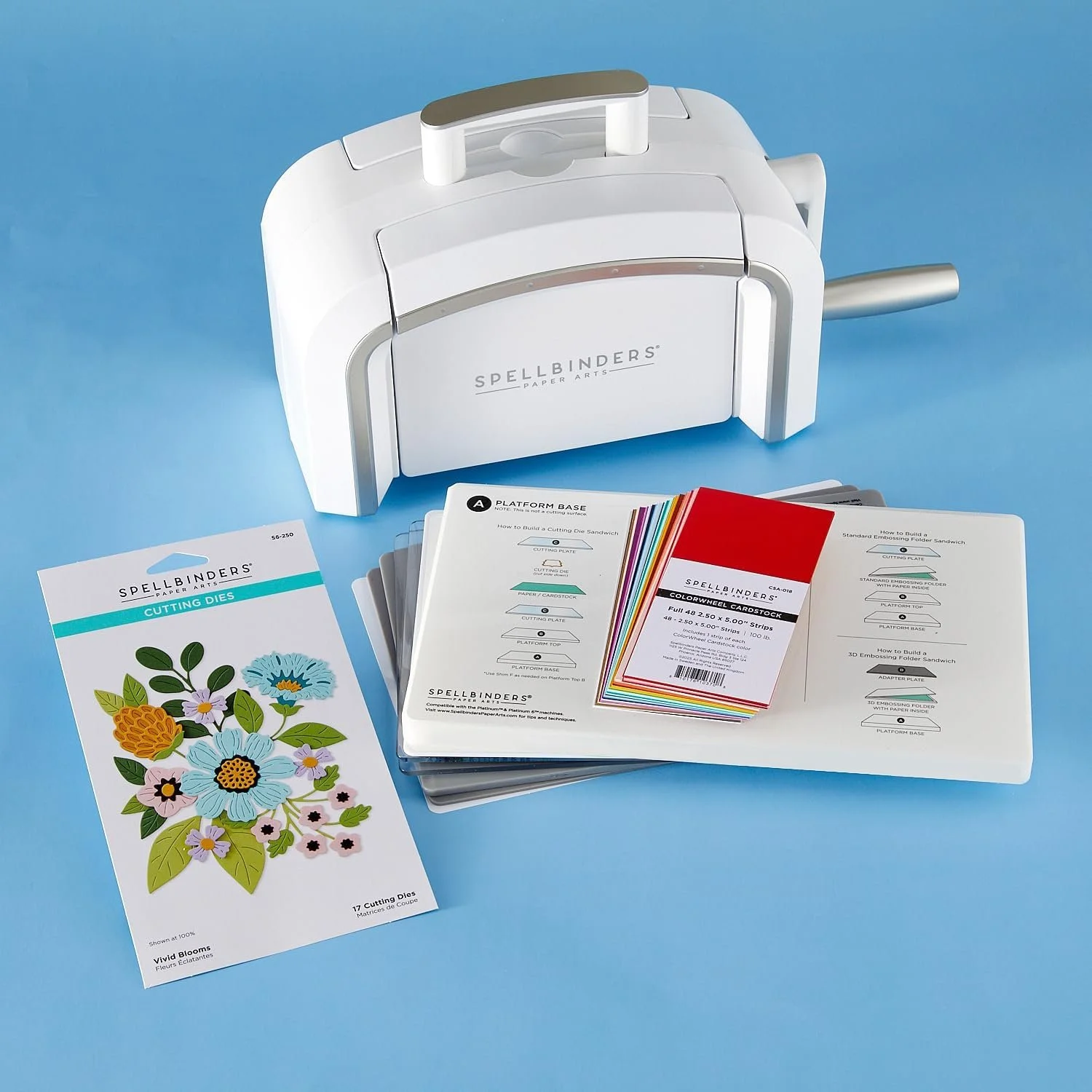
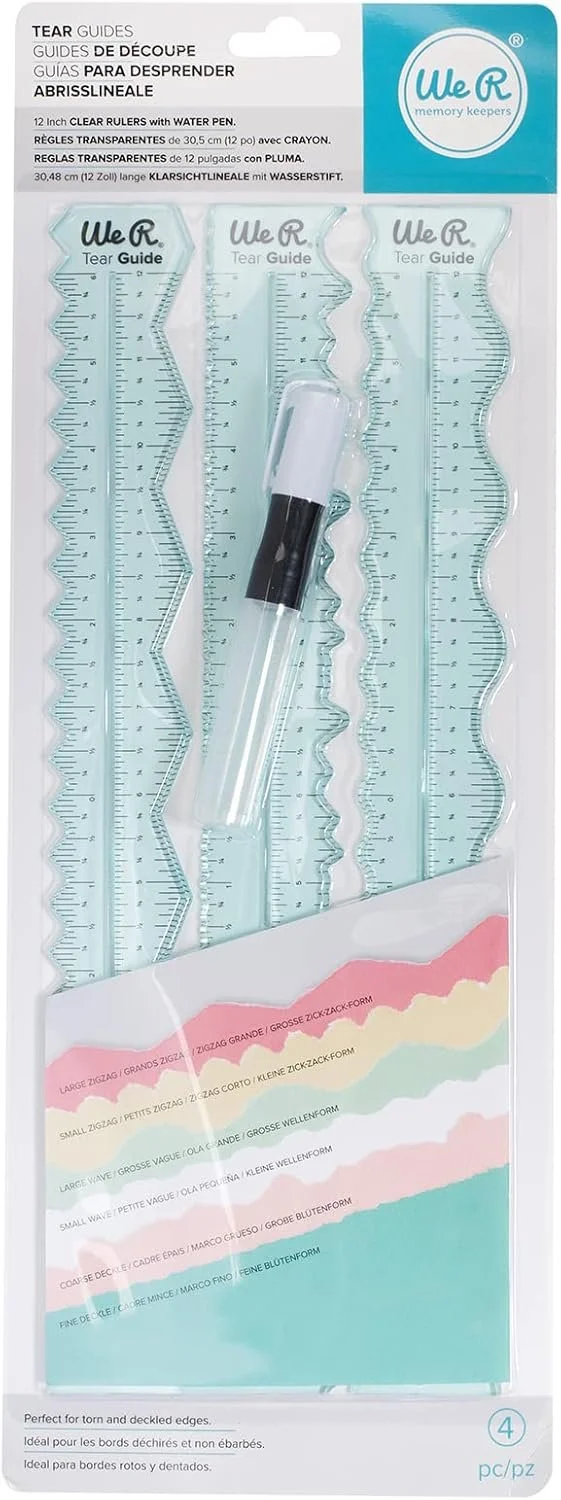
Shaping tools have some overlap with cutting tools, but have a slightly different function - they are designed to form or manipulate paper into different formats. A scoring board, which allows you to create clean folds for projects like cards or folders is one example of a shaping tool. Other tools, like corner punches or deckle edge rulers help shape the perimeter of your paper. I love to use deckle edge rulers to get a softer, handmade-looking torn edge on paper projects. This effect is especially pretty for projects with a vintage or artistic aesthetic.
Various types of paper punches are also great journaling tools, from the prosaic hole punch to specialized shape punches like hearts and flowers. You can use punches additively to make shaped paper elements for collage, handmade confetti, etc. Or you can use punches subtractively to create windows or cutouts in a paper substrate.
For the paper crafter with the most, die-cut/embossing machines can provide a whole new avenue for creating customized paper embellishments. These machines press paper over either an embossing plate (to create patterns of texture) or die-cut plates (to cut the paper into complicated shapes). Often, the same machine can work with both types of plates, so you can emboss and cut intricate designs consistently and quickly at home. However, these machines are expensive and often take up a lot of space on a work surface. I’ve been eyeing one of these machines for a couple years now, but have yet to take the plunge because I don’t know if the additional crafting capabilities are worth the space and budget considerations.
Attachment Tools
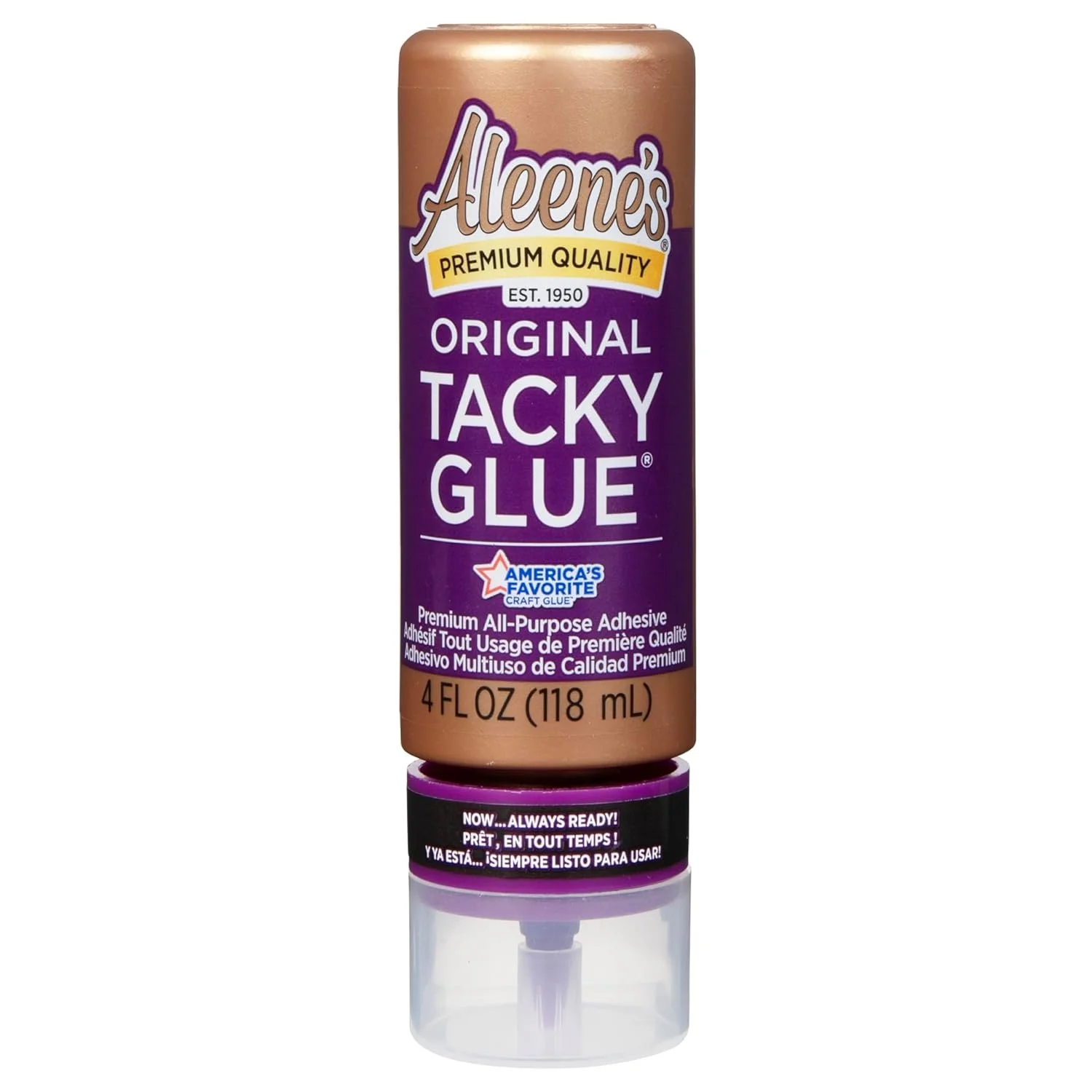
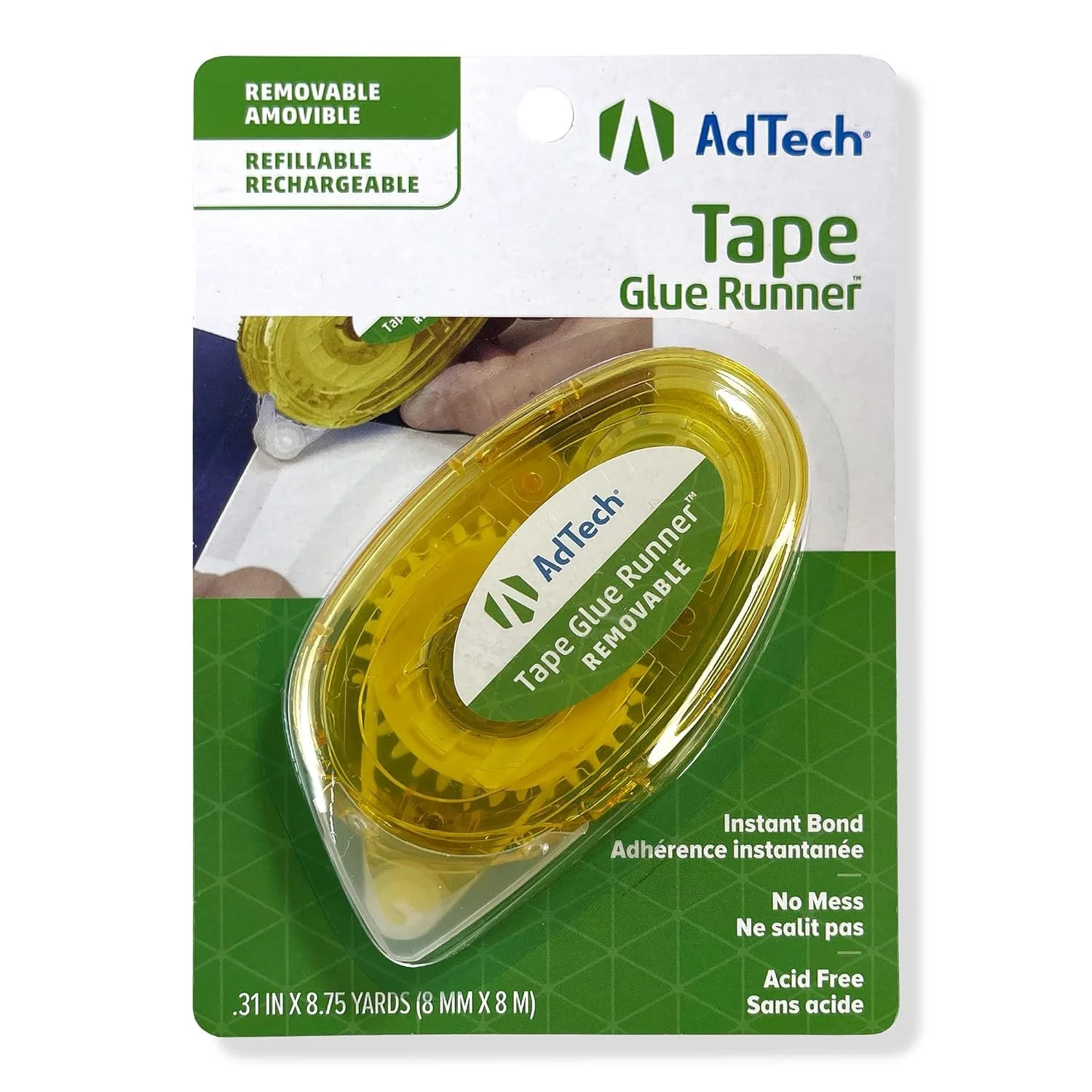
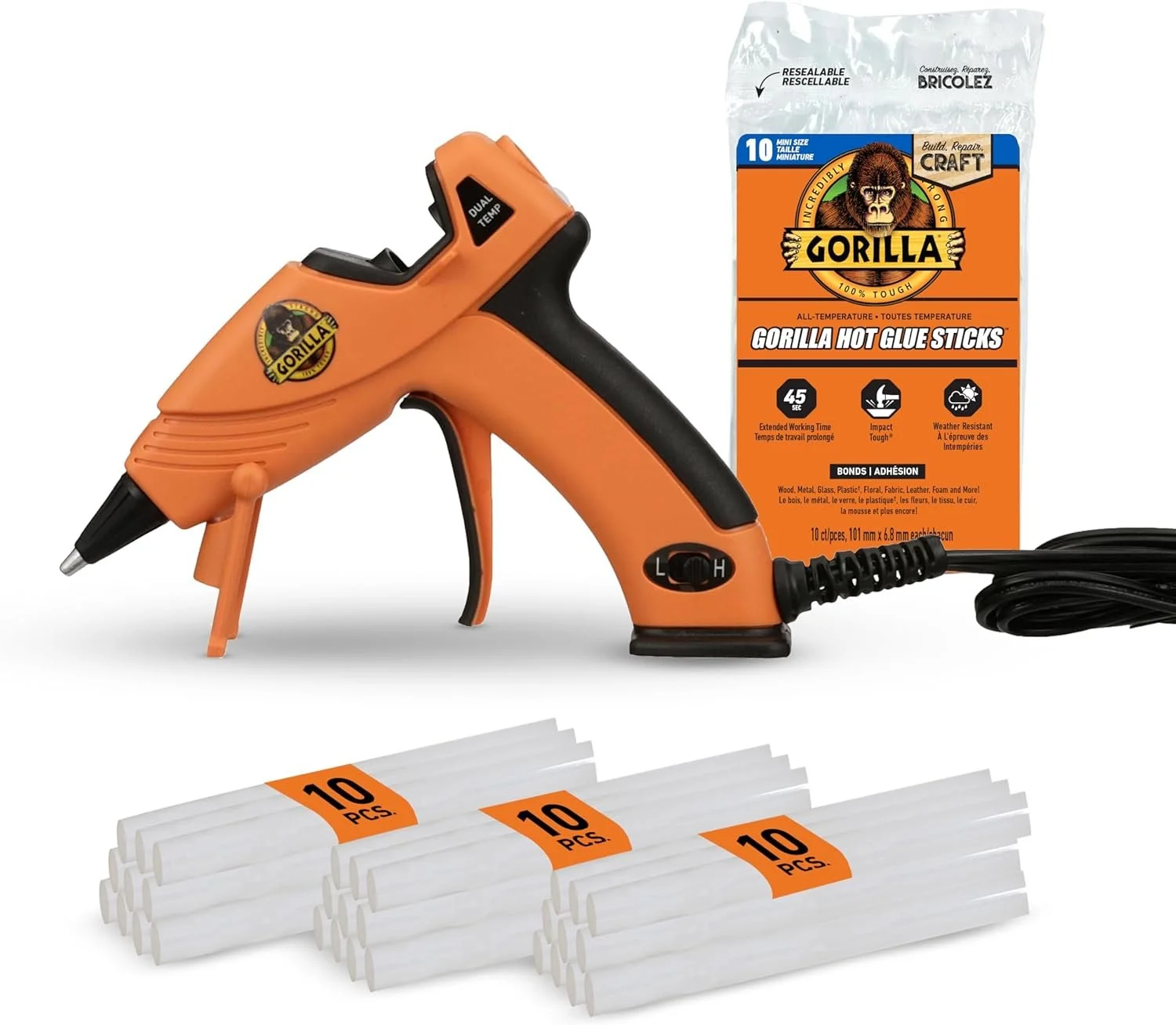
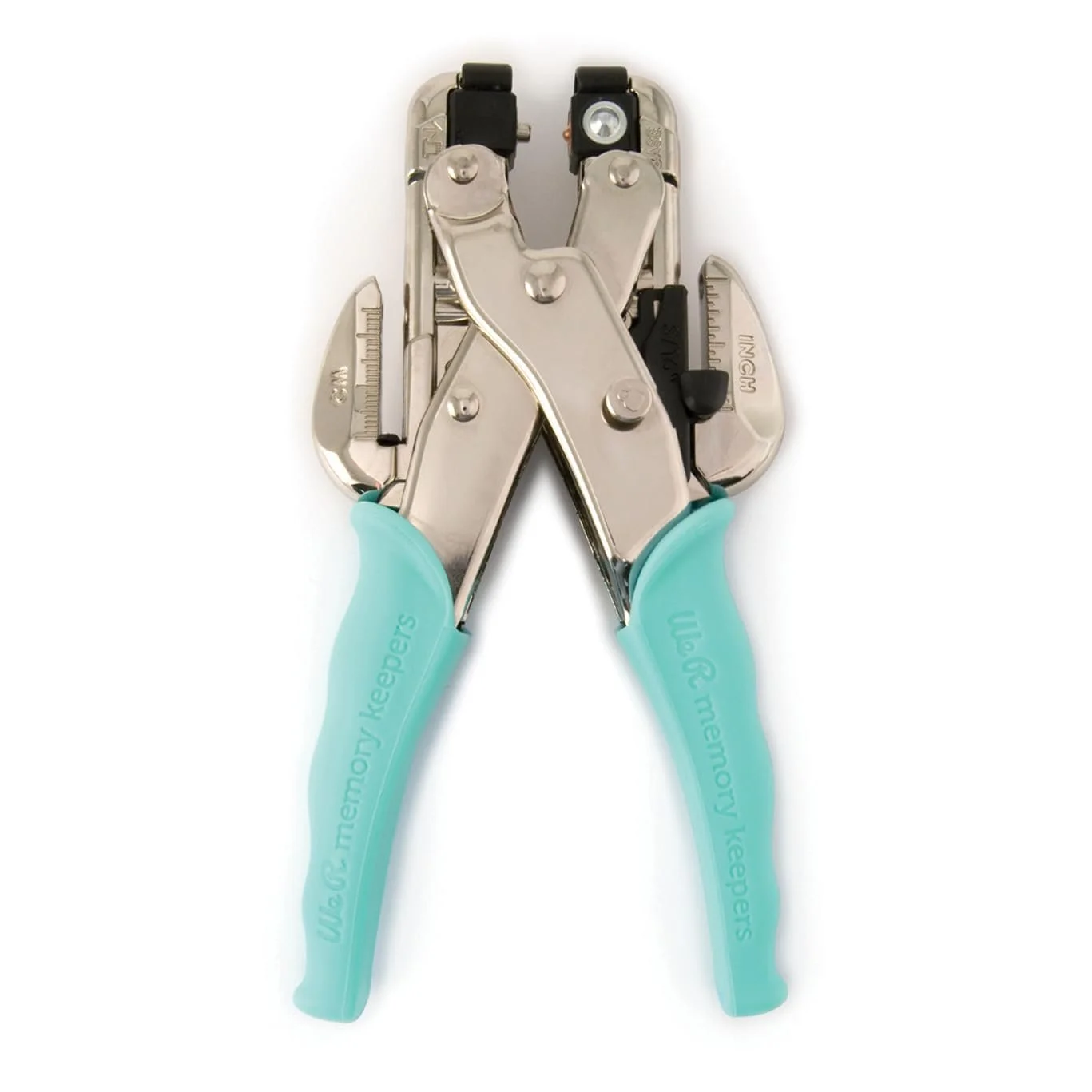
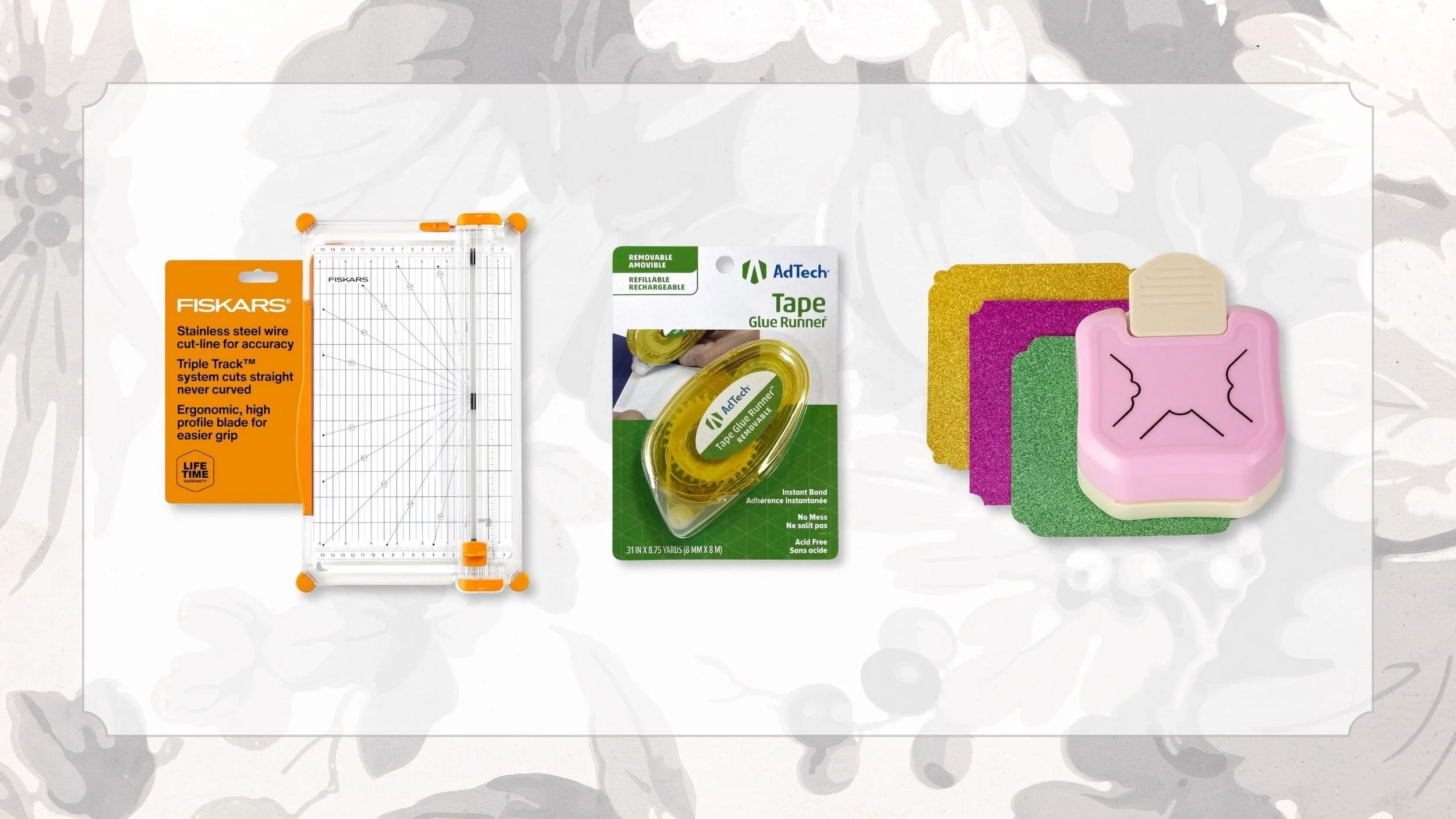
Lastly, attachment tools are all about sticking one piece of paper (or fabric, plastic, metal, etc.) to another. The most common tools for this task are glue and tape. My favorite attachment tool is the humble tape runner. These little hand-held applicators run strips of double-sided adhesive film across a surface without the mess of glue or the visibility of tape. While I use craft glue for projects with fine details or thick/fragile papers, tape-runners are far and away my favorite crafting adhesive for most journaling applications.
For even more bulky materials like fabric trims or small charms, a hot glue gun comes in handy. In my experience, traditional craft glues can’t always handle the weight and texture of items like intricate laces, heavy fabrics, or slick/shiny objects (and craft glues can sometimes leave fabric with a sticky, tacky, or shiny texture, even after drying). A hot glue gun, while more bulky and inconvenient than other adhesive tools, is a heavy-duty solution for these tricky materials.
If you want to use visible connectors in your journal, your options run the gamut from colorful washi tapes to metal eyelets to decorative ribbons. A lot of crafters even like to use their sewing machines to stitch paper or fabric together in their projects. I haven’t tried this technique out, but I do love the way it looks! I frequently use decorative washi and PET tapes in my journals to tip in journal cards, attach dimensional elements like flaps or envelopes, or connect collage elements.
No matter how you prefer to journal, there are a variety of useful tools and supplies that can enhance your creative projects. Painters may include brushes, palette knives, and acrylic medium in their toolkit, while bookbinders might invest in a heavy-duty press and a sharp awl. This flexibility is one of the great joys of the journaling process - it can expand or simplify to fit your needs and preference. Let me know in the comments - what are your essential journaling tools?
Explore Free Printable Designs