Where To Find “Junk” for Junk Journaling
Junk journaling is a type of journaling that uses found materials and ephemera as content (and sometimes even as the material of the journal itself). Junk journaling celebrates the ordinary and imperfect moments of day to day life. Anything can go in a junk journal - ticket stubs, discarded product packaging, maps, receipts, brochures, catalog clippings, vintage greeting cards - the options are endless.
Because of this versatility, junk journaling can be a very inexpensive and accessible introduction to creative journaling. It offers a way to memorialize daily life and celebrates the materials we come across in our ordinary routines. You can find items for junk journaling almost anywhere, but after years of keeping junk journals, I have some favorite sources for interesting and unique materials. Read on to explore my faves.
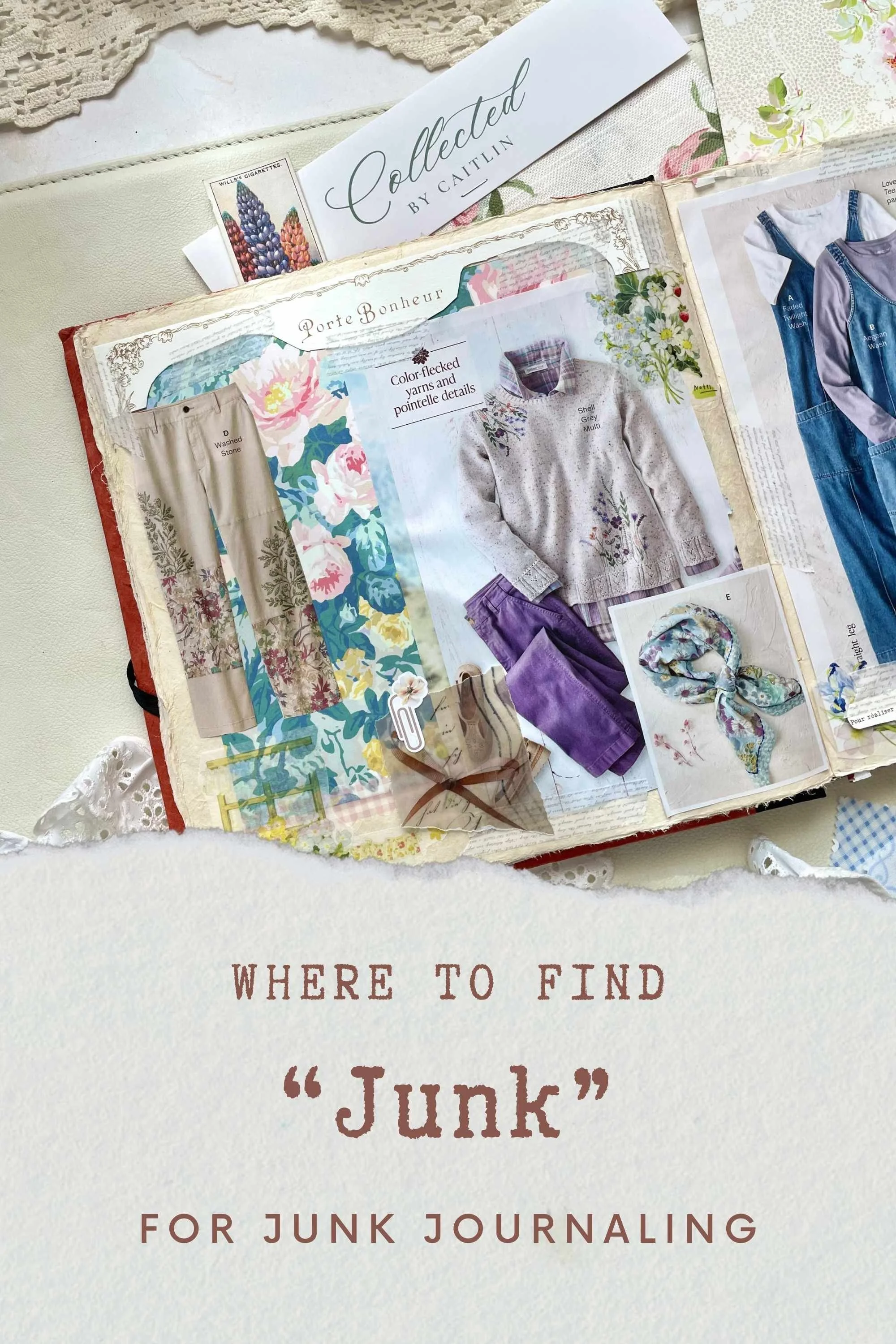
One of the easiest ways to get started with junk journaling is to begin saving used packaging from regular purchases like food or snacks, clothing, or skincare products. Companies put a lot of money into making product packaging as enticing as possible and the resulting junk can be recycled into colorful and creative journal spreads.
But packaging isn’t the only source of interesting material in daily life. You can save and use movie tickets, shopping receipts, takeout menus, to-go cup sleeves, and more to chronicle life in your junk journal. In fact, once you start a junk journal, you may find yourself noticing new possibilities as you go about your normal activities. Business cards on the counter of a local restaurant. Seed packets at the garden supply store. Old newspapers left on the table at your favorite coffee shop. As with many creative habits, junk journaling offers opportunities for paying attention to what often goes unnoticed.
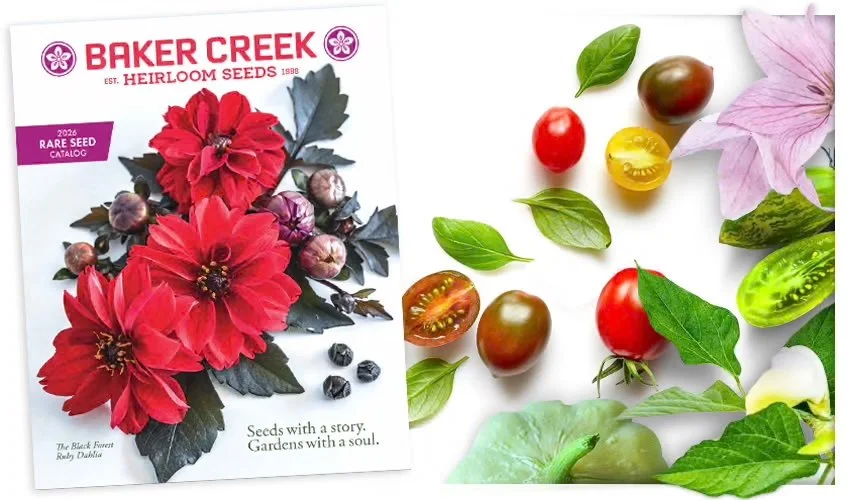
When you begin junk journaling, you may find yourself looking at ordinary (and maybe even unwanted) items like junk mail in a different light. You could create a series of collages using advertising postcards that would otherwise be discarded, or you might discover new uses for holiday catalogs that find their way to your mailbox. Personally, I love receiving physical catalogs in the mail for clothing, home goods, and gardening because they offer such a variety of interesting imagery and typography to use in my journal pages.
While mail order catalogs are much less popular now than in decades past, you can still order free catalogs from many companies. Some of my favorite places to get print catalogs from include Baker Creek Heirloom Seeds, April Cornell, The Vermont Country Store, Holly Yashi, David Austin, and Serena & Lily.
And you don’t have to wait for junk to come to you! Junk journaling provides the perfect excuse to explore your city or neighborhood. Stop at the reception desk of any art or natural history museum to stock up on gallery maps, visitor guides, and exhibition flyers. Pick up pretty postcards at your local botanical garden or zoo. Collect stickers from the gift shops of national parks or regional tourist attractions. Visit cultural and community festivals and be on the lookout for free or inexpensive paper goods.
One of my favorite experiences finding unexpected journaling materials took place at my local Aki Matsuri (Japanese Fall Festival). The festival featured a thrift/vintage vendor tent, where I was delighted to find tables full of vintage Japanese books and magazines selling for pennies. I purchased a stack of vintage knitting magazines and illustrated cookbooks for a total of about five dollars. These moments of delight and serendipity are what make junk journaling so fun!
Libraries, community centers, and local universities are all great places to scout for journal materials. When I was growing up my home town library had a free table in their lobby where I regularly scored old National Geographic and home decor magazines. I worked on a state university campus after grad school and used to love walking through the biology department building to pick up old, defunct textbooks that professors had left behind. Community centers often have substantial selections of brochures for local businesses and attractions as well as regional maps and tourism guides.
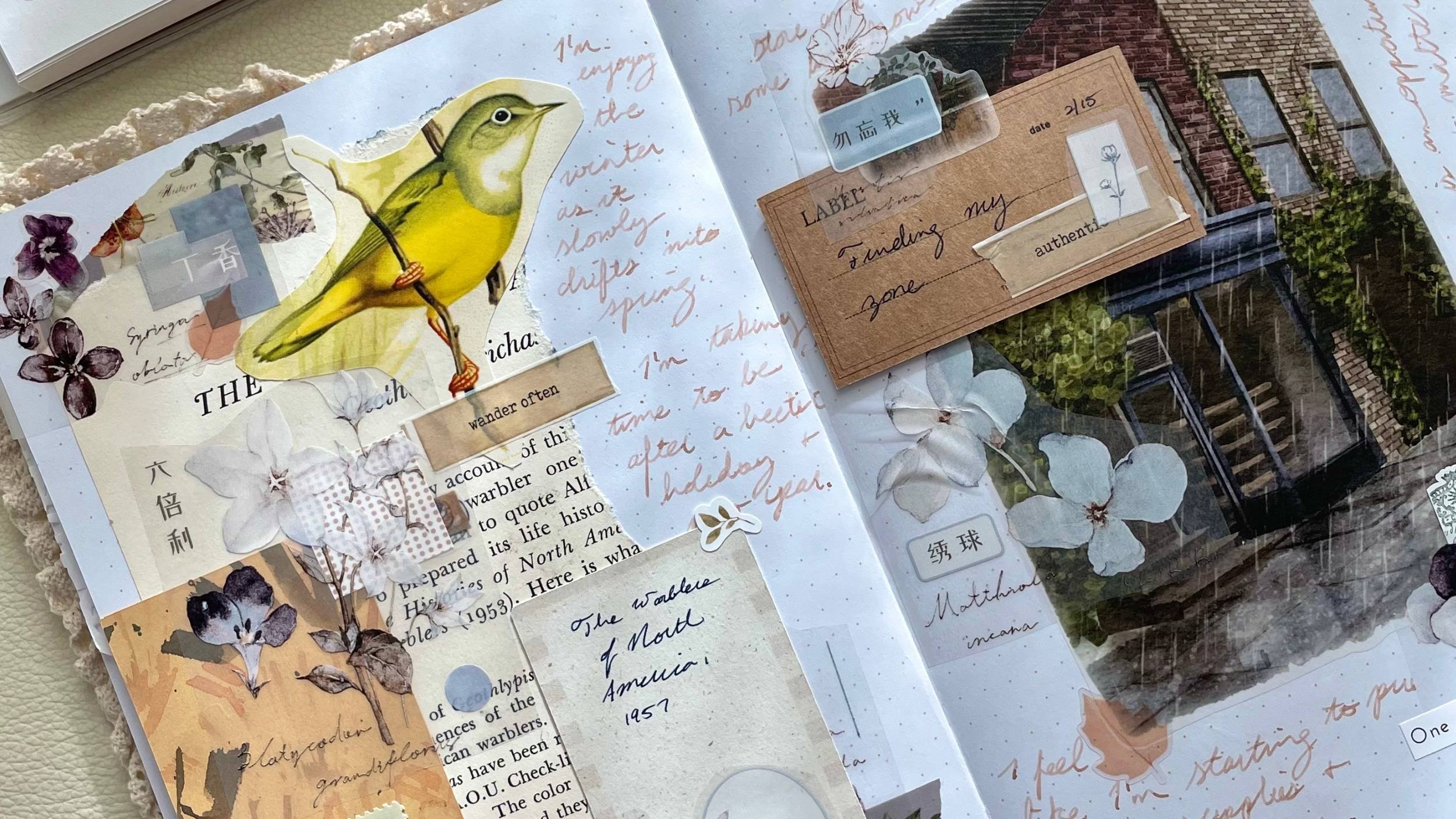
If you enjoy hunting for items at garage sales, thrift stores, or junk shops, you’ll have access to an almost infinite variety of unique ephemera, from old sheet music to antique photographs to vintage books. I’ve found everything from hundred-year-old German grammar books* to scientific monographs on South American orchids and Victorian millinery advertisements on my local flea market circuit - all at bargain prices. If, like me, you have a soft spot for antique art and imagery, these venues are a goldmine of creative inspiration.
*A Note: As a rule, I don’t cut up or disassemble antique books with historic or collectible value, but there are countless other cast-off books sitting neglected on thrift store shelves that can be given a new life in creative projects. If you’re sensitive to the thought of directly repurposing old books, you can also digitally scan pages and print them out to use again and again in your journal spreads.
No matter your interests, budget, or skill level, junk journaling is a creative practice that can be adapted to fit your personal life and style. At its core, junk journaling celebrates the unexpected creative opportunities of daily life. There’s no wrong way to keep a junk journal - you can make your own rules as you go along. I hope the sources I’ve listed give you some new ideas for future projects, and I’d love to hear in the comments - what are your favorite sources for junk journal materials?